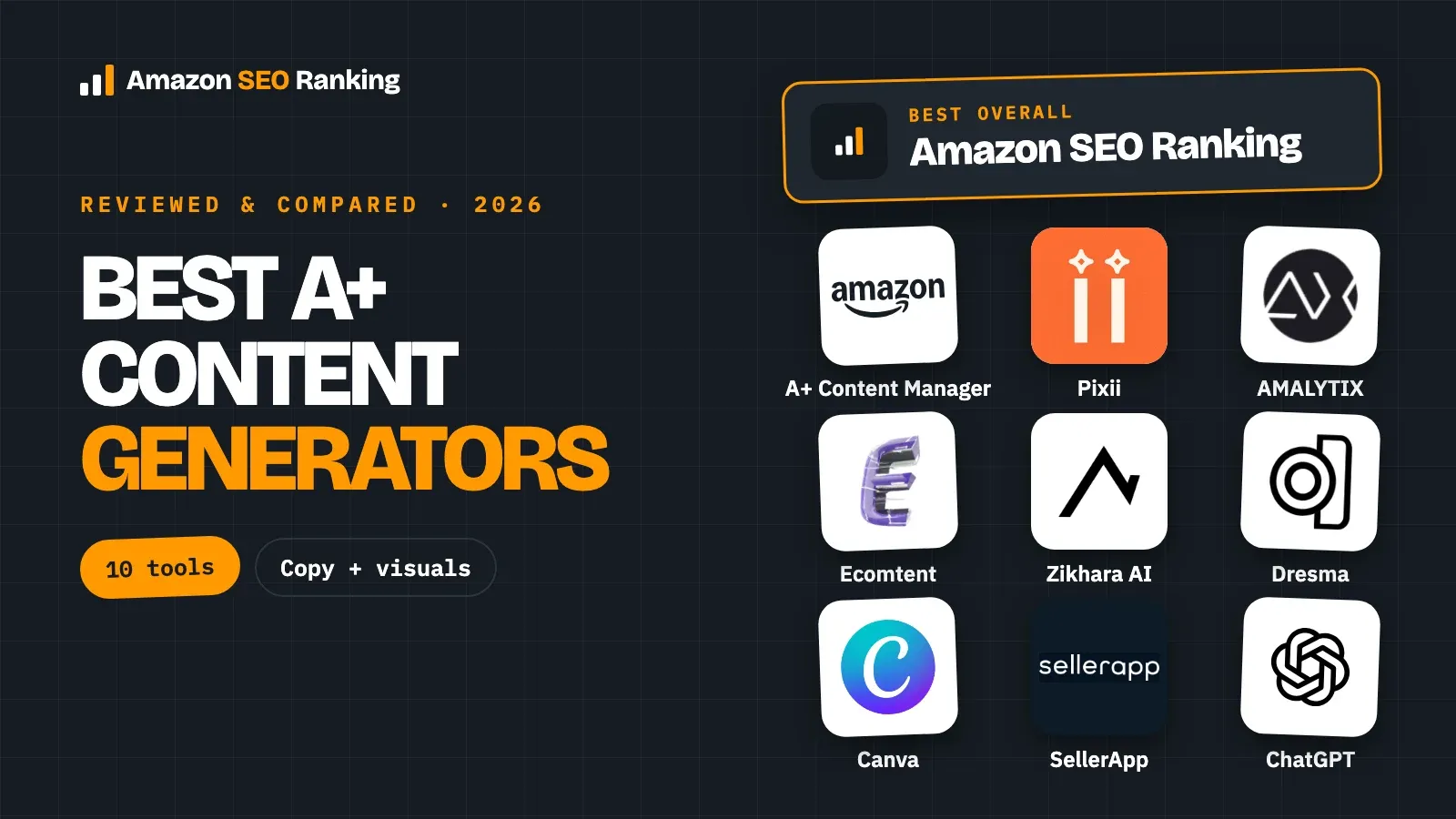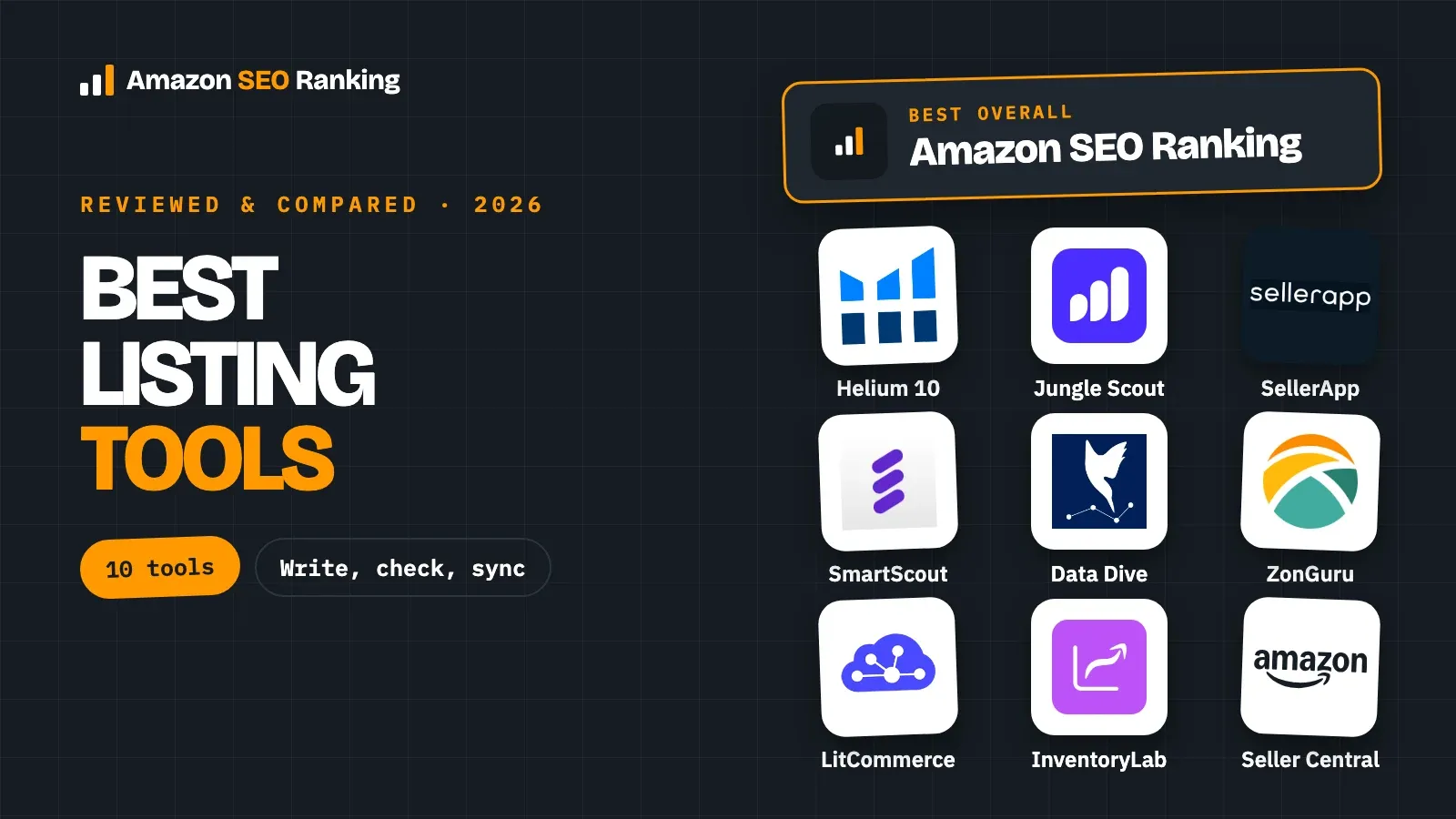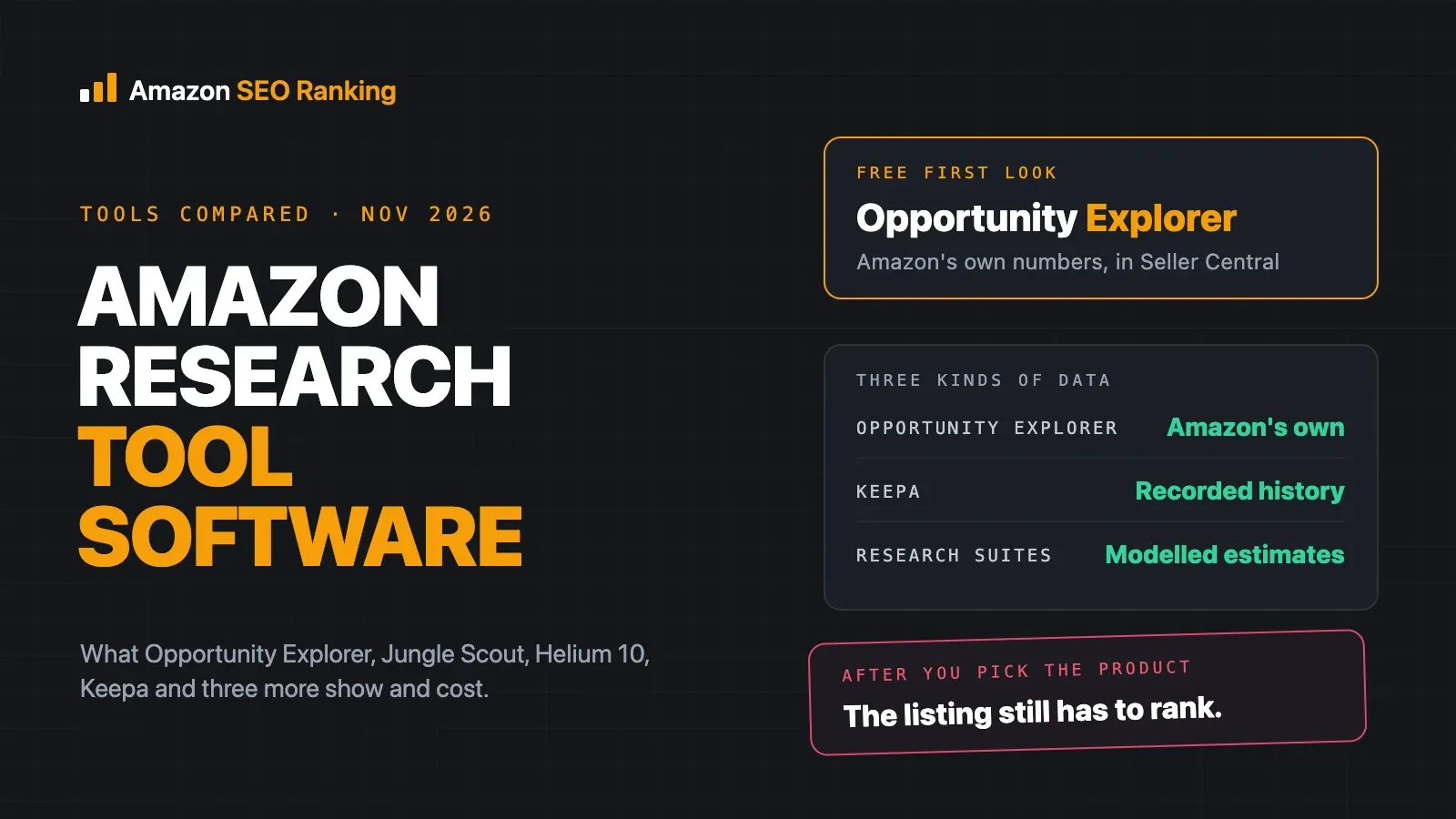
Most sellers who use Amazon research tool software start with one of four: Amazon's free Product Opportunity Explorer, Jungle Scout, Helium 10 or Keepa. Opportunity Explorer gives you Amazon's own demand data at no extra cost. Jungle Scout and Helium 10 add modelled sales estimates and product databases, and Keepa records the price and sales rank history that tells you whether those estimates hold up. Wholesale and brand-sourcing sellers often add SmartScout.
We make Amazon SEO Ranking, a listing audit and rewrite tool. It does no product research, and we say so below. That's why this guide is useful from our side of the fence: we see sellers arrive after the research is done, with a product picked and a listing that doesn't rank. So this post covers both halves. Which tool helps you choose a product, and which job starts once you've chosen one. Prices are published monthly rates as of 19 November 2026.
Key Takeaways (TL;DR)
- Start free. Amazon's Product Opportunity Explorer costs nothing beyond a Professional selling account ($39.99/mo) and shows Amazon's own search, purchase, review and return data for each niche.
- Pick one paid suite for estimates. Jungle Scout suits new private-label sellers who want a guided flow; Helium 10 suits sellers who also want keyword and PPC tools in the same login.
- Add Keepa to check the numbers. Every sales figure from a research tool is an estimate built from Best Sellers Rank. Keepa's recorded history (free charts, Pro €29/mo) shows what happened.
- Match the tool to your business model: SmartScout for wholesale and brand mapping, Keepa for arbitrage, Jungle Scout or Helium 10 for private label.
- Research ends at the purchase order. Once you've picked a product, the work moves to the listing: title, bullets, images and claims. Research suites don't grade that against a published standard, and that's the job Amazon SEO Ranking does free, 3 audits a month, no card.
Amazon Research Tool Software at a Glance
Monthly prices on 19 November 2026. Most tools are cheaper on annual billing.
| Tool | Best For | What It Gives You | Data Type | Monthly Price |
|---|---|---|---|---|
| Amazon Product Opportunity Explorer | First check on any niche | Search volume, purchase behavior, reviews and returns per niche | Amazon's own data | Free with a Professional account ($39.99/mo) |
| Jungle Scout | New private-label sellers | Product Database, Opportunity Finder, supplier database | Modelled estimates | From $49 ($29 annual) |
| Helium 10 | Research, keywords and PPC in one login | Black Box, Xray, Cerebro, Market Tracker | Modelled estimates | Free (limited), Platinum $129, Diamond $359 |
| Keepa | Checking estimates against history; arbitrage | Price, sales rank, Buy Box and stock history | Recorded history | Free charts, Pro €29 |
| SmartScout | Wholesale and brand mapping | Brands database, Seller Map, Traffic Graph | Modelled estimates | From $49 |
| ZonGuru | Product plus supplier research | Niche Finder, Sales Spy, supplier tools | Modelled estimates | Researcher $49 ($29 annual) |
| AMZScout | Low-cost browser research | Product Database, Product Tracker, PRO Extension | Modelled estimates | $59.99 (cheaper annual or lifetime) |
| Amazon SEO Ranking | After launch: fixing the listing | 12-criteria listing audit, AI rewrite, keyword volume (full on Pro) | Read from the live listing | Free, Pro $79, Agency $249 |
The last row isn't a research tool. It's there because the question "which software do I need?" usually covers both choosing a product and selling it.
What Amazon Research Tool Software Does
Amazon research tool software tells you whether a product is worth stocking before you pay a supplier. It does that with three kinds of data, and they carry different levels of certainty.
Amazon's own data comes from Seller Central. Product Opportunity Explorer and Brand Analytics report search volume, clicks, purchases and returns as Amazon records them. Nothing here is guessed, but you only see what Amazon chooses to show, and only with a selling account.
Recorded history comes from tracking a product page over time. Keepa has logged price, Best Sellers Rank, offer counts and stock-outs for years. It tells you what happened to a product, with no model in between.
Modelled estimates fill the gaps Amazon leaves. Monthly sales, revenue, search volume and market share don't appear on a product page, so Jungle Scout, Helium 10, SmartScout and the rest calculate them, mostly from Best Sellers Rank. These are the numbers sellers make buying decisions on, and they're the least certain of the three.
Good research uses all three. You find a niche in Opportunity Explorer, size it with a suite's estimates, then check the history in Keepa before you order samples.
Four Questions an Amazon Product Research Tool Should Answer
A product idea passes or fails on four questions. Each tool in this list answers some of them better than others, so it helps to know which question you're asking before you open a dashboard.
Is There Demand, and Does It Last?
Demand means shoppers search for the product and buy it. Opportunity Explorer gives you Amazon's own search volume and purchase data for a niche, and Helium 10 and Jungle Scout estimate both for individual products.
Durability is the half sellers skip. A spike that peaks every December, or a trend that faded after a viral month, looks identical to steady demand in a 30-day snapshot. Keepa's sales rank history over one to three years is the quickest way to tell them apart.
Can a New Listing Compete?
Look at the top listings for your main search. If the first page is held by listings with thousands of reviews, one strong brand, or Amazon itself, a new seller will struggle to reach page one without heavy ad spend.
Jungle Scout's Opportunity Finder and Helium 10's Black Box both score competition, and SmartScout shows which brands hold a category. Treat these scores as a shortlist filter, then open the top ten listings yourself.
Does the Margin Survive Fees?
Revenue estimates mean nothing until you subtract the supplier price, shipping, referral fees, FBA fees, storage, returns and ads. Fees moved twice this year: most 2026 FBA changes took effect on January 15, and a 3.5% fuel surcharge on FBA fulfillment fees started on April 17, 2026, according to eFulfillment Service.
Most suites include a profit calculator. Run it with your real supplier quote, not the tool's default cost, and include return rates from Opportunity Explorer's returns data.
Can You Make It Better?
The last question is the one no tool answers for you. If the top listings already solve the problem well, there's nothing for you to improve. Review complaints are the best clue: Opportunity Explorer groups review themes for a niche, and reading the one- and three-star reviews on the top five listings takes twenty minutes.
Write down the three complaints that come up most. If a supplier can fix at least one of them in the product itself, such as a lid that leaks or a strap that snaps, you have a reason for shoppers to pick you over a listing with 4,000 reviews. If every complaint is about price or shipping, there's no product angle to win on.
Those complaints also become your listing copy. A bullet that answers the leak worry directly, backed by a spec you can prove, is the reason a shopper picks your listing once the product exists.
The Best Amazon Product Research Tools in 2026
We picked these seven because they're the tools sellers name most often for choosing a product, and because each one is strongest at a different question above. Prices are monthly unless noted.
1. Amazon Product Opportunity Explorer
Best for: a free first look at any niche, using Amazon's own numbers.
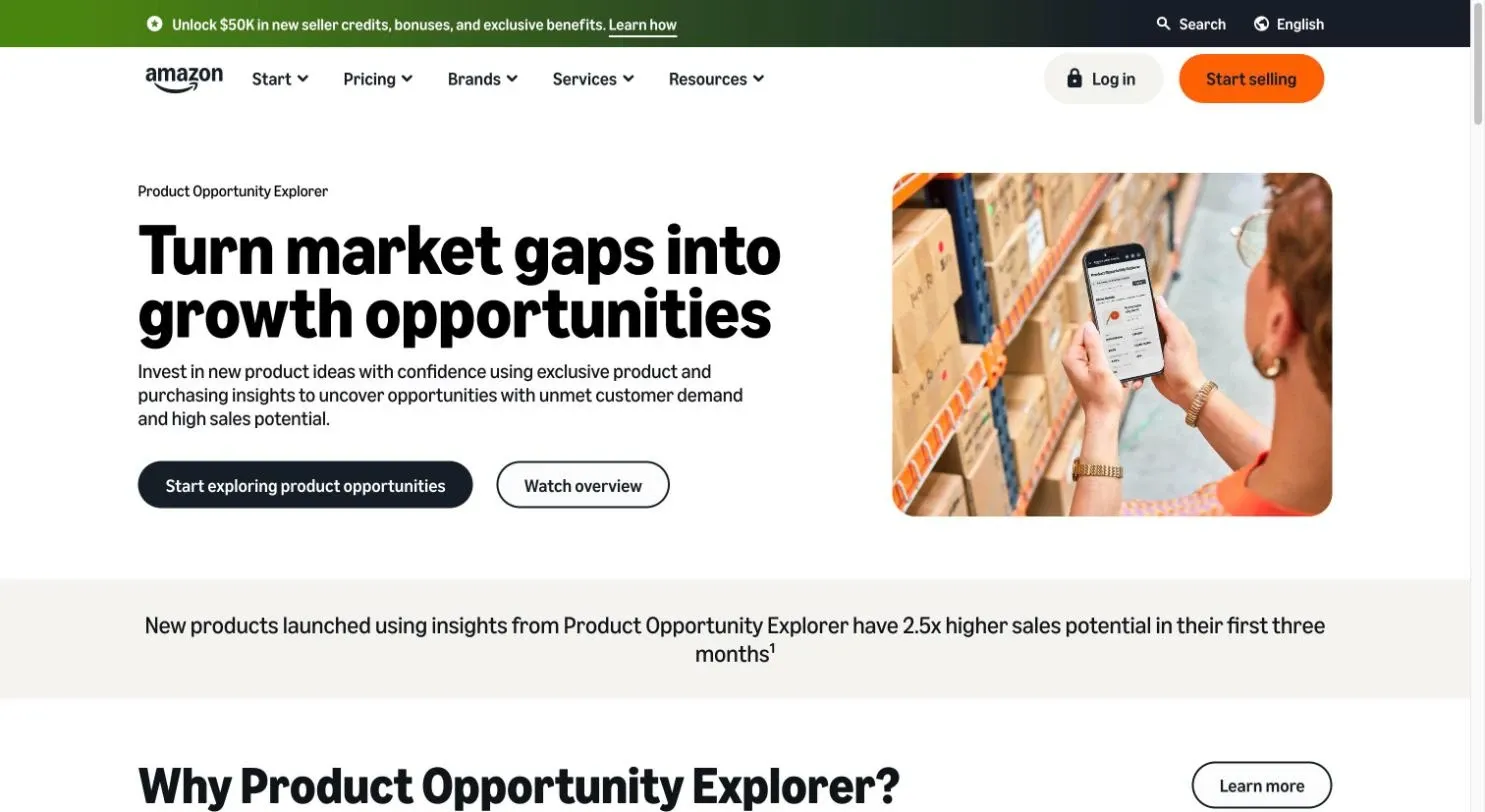
Product Opportunity Explorer sits in Seller Central under Growth. It groups products and search terms into niches based on what shoppers click and buy after searching. For each niche, Amazon says you can explore demand and purchasing behavior, competition, search terms and volume, customer reviews and returns.
It's the only tool here built on first-party data, which makes it a good benchmark for the others. Amazon also claims that new products launched using its insights have 2.5x higher sales potential in their first three months, based on its own 2025 study of sellers in the US, EU and Japan. That's Amazon's figure about "sales potential", with no published method beyond a footnote, so read it as a reason to try the tool rather than a forecast.
What it leaves out: product-level sales history, supplier search, and a full profit model. You also need an account to see anything.
Price: no separate fee. It needs a Professional selling account, which Amazon lists at $39.99/mo plus selling fees.
2. Jungle Scout
Best for: new private-label sellers who want a guided route from idea to supplier.
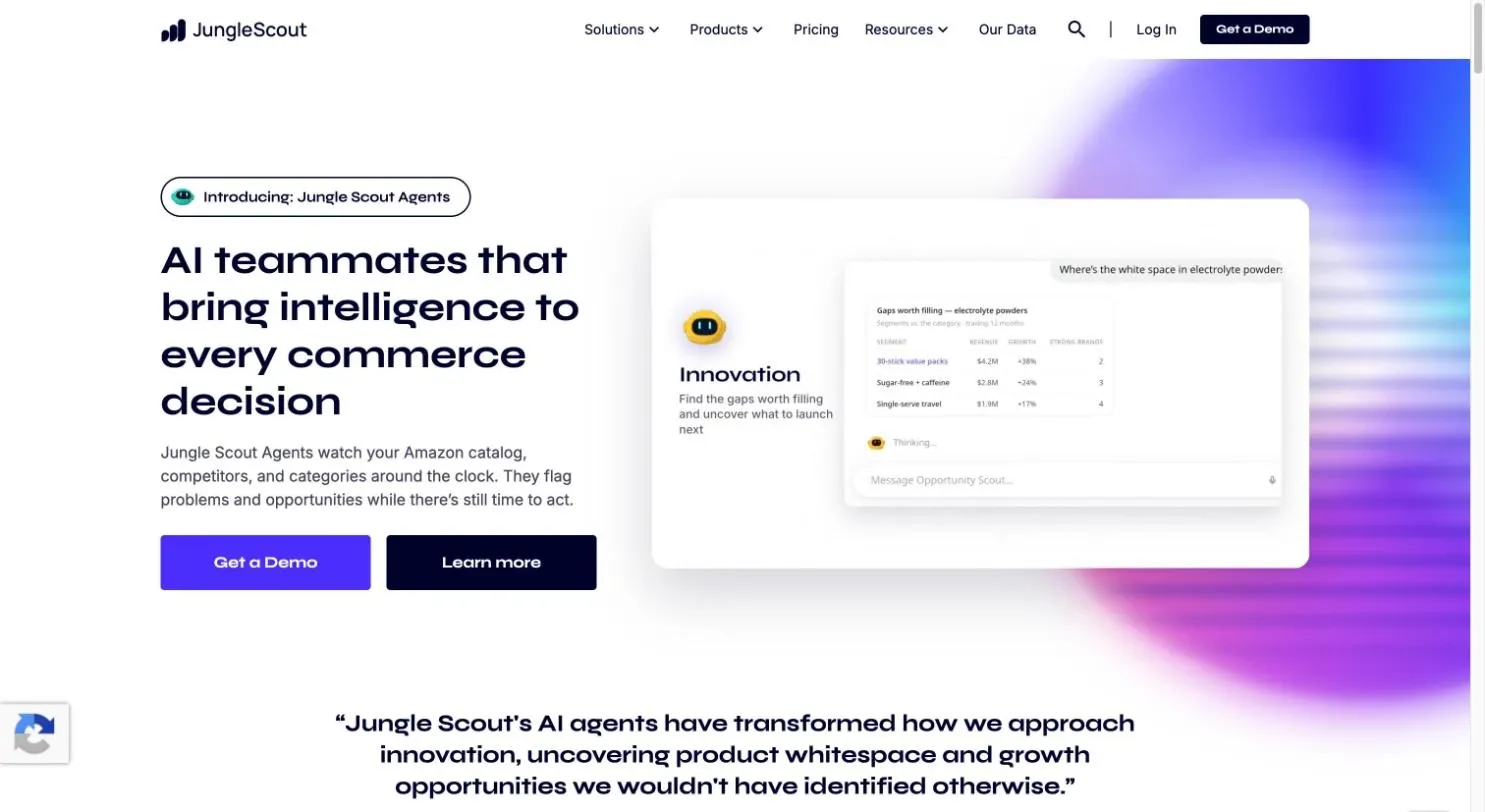
Jungle Scout built its name on product research, and the flow still shows it. The Product Database filters millions of products by estimated sales, price, reviews and size; Opportunity Finder ranks niches by demand and competition; and the Supplier Database finds factories that already ship to Amazon sellers. The Chrome extension puts sales estimates on any search results page.
Higher plans add Competitive Intelligence for tracking market share in a segment you define. Jungle Scout has no free plan; the entry plan is mostly research, with thin listing tools.
Price: from $49/mo, about $29/mo billed annually, according to LandingCube's 2026 comparison. The top Brand Owner + Competitive Intelligence plan is $149/mo.
3. Helium 10
Best for: sellers who want research, keywords and PPC in one subscription.
Helium 10 is the largest suite on this list. For research, the tools that matter are Black Box (a product and niche database with filters), Xray (sales estimates on any search page through the Chrome extension) and Trendster for seasonality. Cerebro and Magnet cover keywords, and Market Tracker follows a niche over time.
The breadth is the reason to buy it and the reason it costs more. A seller who only wants to pick a product pays for 20+ tools. EcomCrew also reports that Platinum now caps keyword research at 100 searches a month, which matters if research is mostly keyword work for you.
Price: a limited free plan; Platinum $129/mo ($99 annual) and Diamond $359/mo ($279 annual).
4. Keepa
Best for: checking what a product did, not what a model predicts. Essential for arbitrage and wholesale.
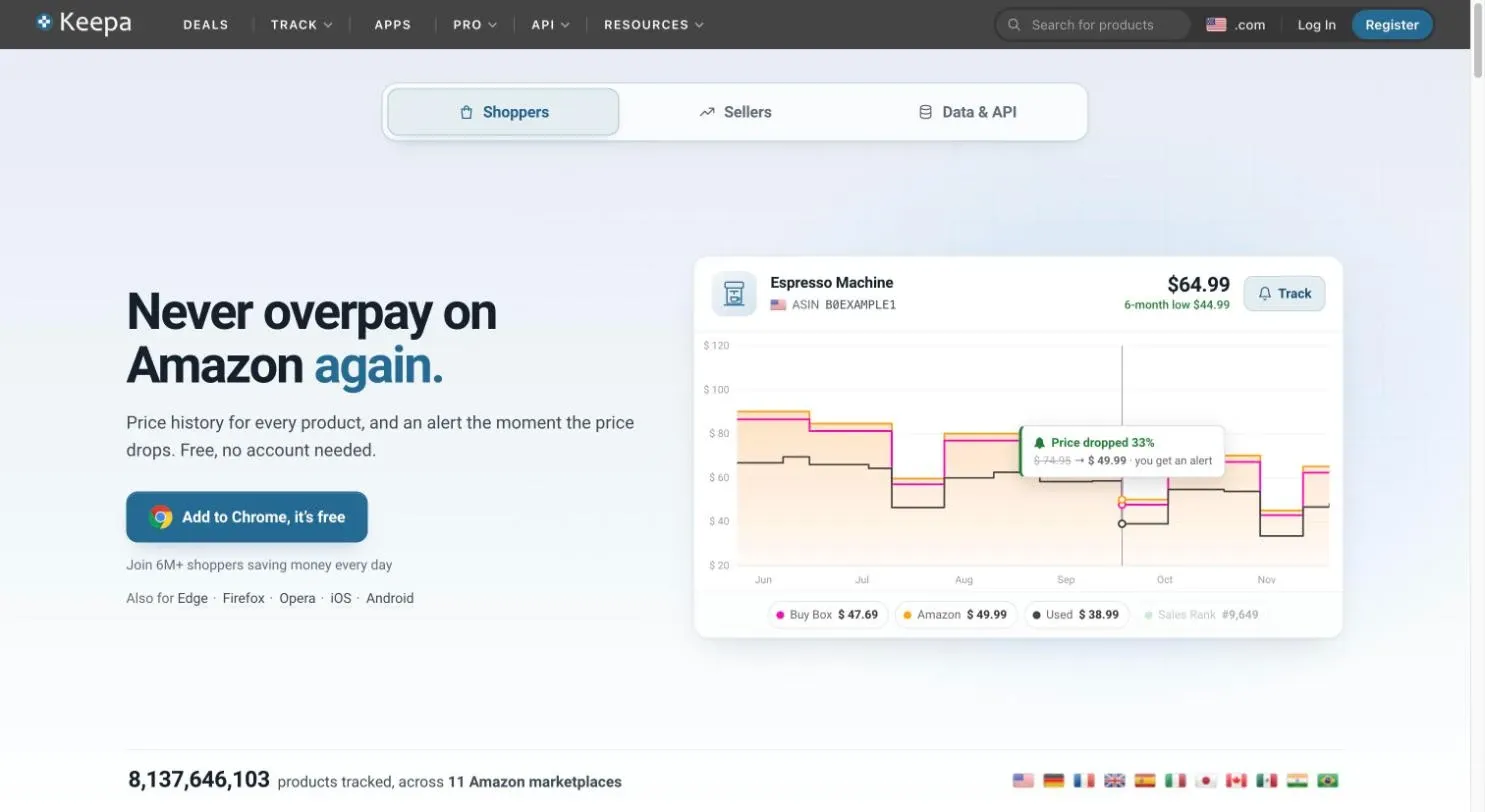
Keepa tracks price, Best Sellers Rank, Buy Box ownership, offer counts and stock for Amazon products. The free browser extension shows price history on every product page. Keepa Pro adds the seller data: sales rank history, Buy Box statistics, Product Finder for filtering products by their history, and bulk exports.
Use it as the second opinion on every estimate. If a suite says a product sells 600 units a month, Keepa's rank chart shows whether that rank held for a year or lasted two weeks after a price cut.
Price: free charts. Keepa Pro is €29/mo or €290/yr, with no free trial, per RevenueGeeks. It bills in euros only.
5. SmartScout
Best for: wholesale sellers, brand sourcing and agencies mapping a category.
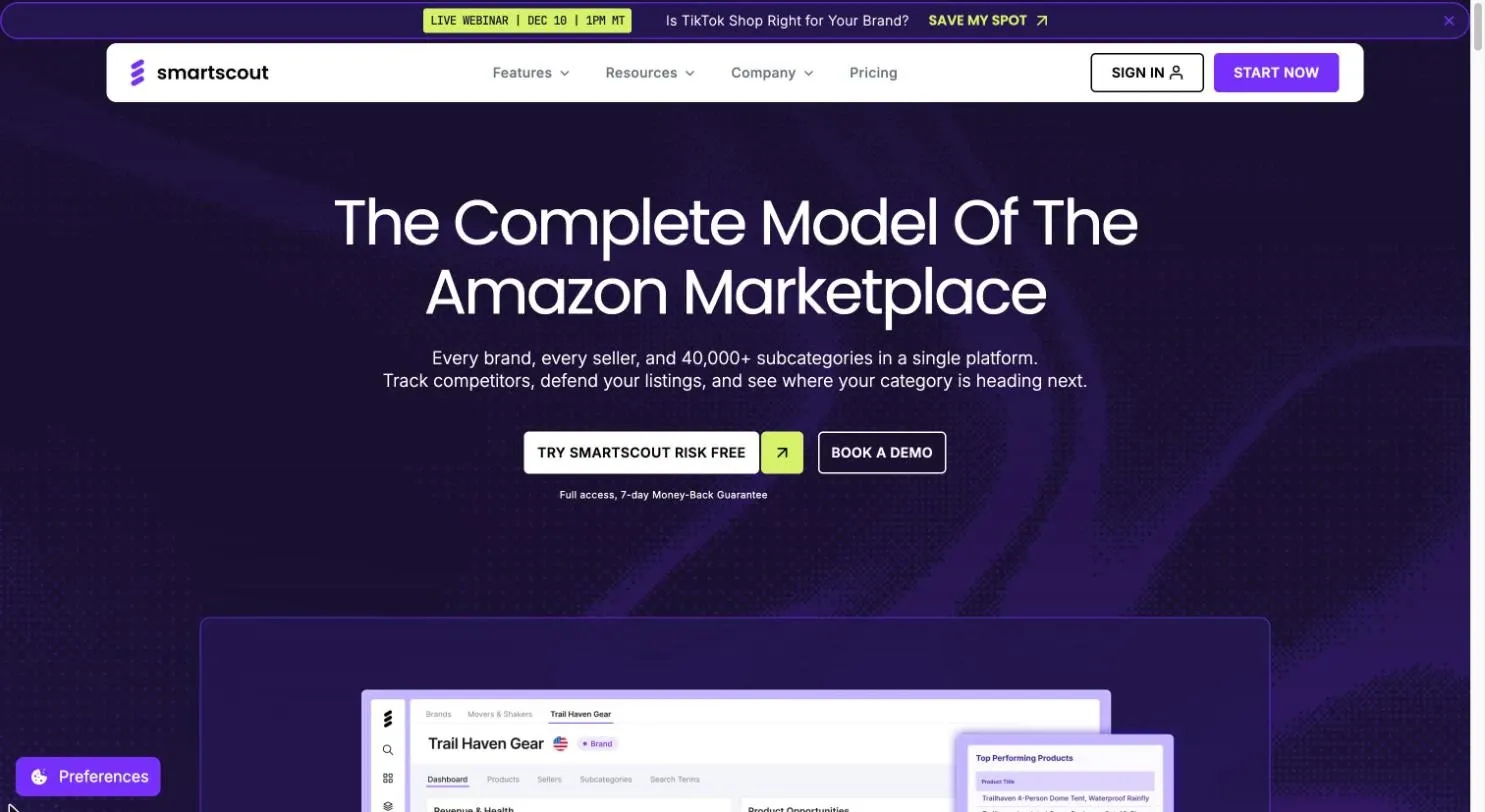
SmartScout looks at Amazon from the top down: categories, then brands, then sellers and products. The Brands database shows estimated revenue and growth by brand, Seller Map shows where sellers are based, and Traffic Graph shows how listings send shoppers to each other.
For a private-label seller with one idea, that's more than you need. For a wholesale seller looking for brands to approach, no other tool here maps the relationships as clearly.
Price: Basic from $49/mo, which FrontDesk Review read from SmartScout's pricing page in September 2026. The same tracker recorded $29 in June, so check the live page.
6. ZonGuru
Best for: sellers who want product and supplier research together at a low entry price.
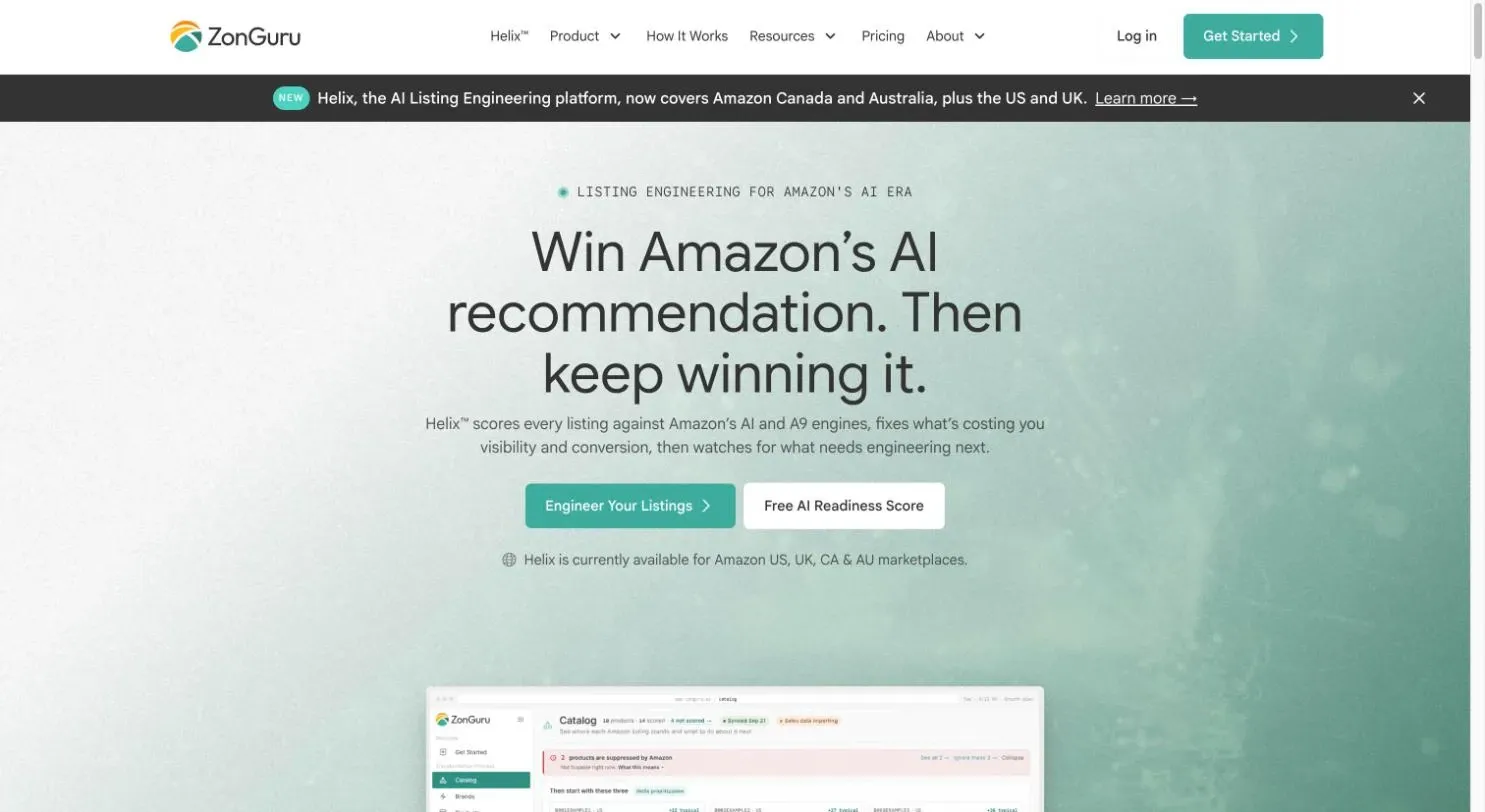
ZonGuru's Niche Finder and Sales Spy cover product discovery, and its Seller plans add a listing optimizer, review requests, email sequences and inventory tracking. It suits small catalogs that want operations tools alongside research.
Its listing score covers keyword placement only, and pricing on the Seller plans rises with your number of SKUs.
Price: Researcher $49/mo ($29 annual), Seller plans from $79/mo, with a 7-day free trial, per LandingCube's comparison.
7. AMZScout
Best for: budget sellers who prefer researching in the browser.
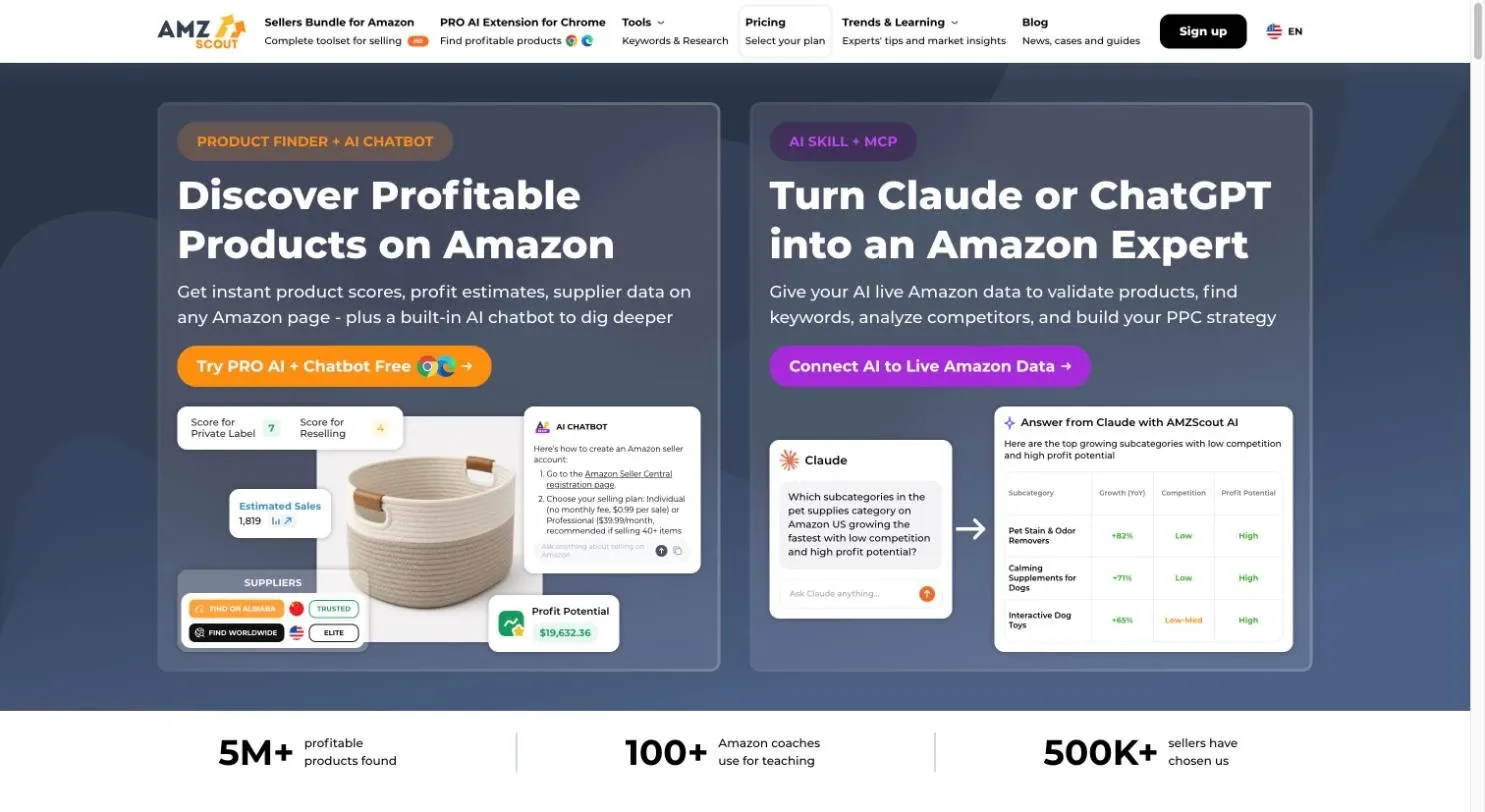
AMZScout offers a Product Database, a Product Tracker and a PRO Extension that adds sales estimates to Amazon search pages, plus supplier search connected to Alibaba. It's one of the cheaper ways to see estimates if you commit upfront.
There's no free plan, and the mix of bundles and promotions makes it harder to compare like for like.
Price: $59.99/mo month to month, roughly $33 to $50/mo on annual plans, or a one-time lifetime purchase of $1,599.99.
How Accurate Is an Amazon Sales Estimator?
An Amazon sales estimator converts Best Sellers Rank into units sold, and two tools can disagree by a wide margin on the same product. Vendors publish their own accuracy studies, usually with themselves on top, so independent tests are the better guide.
In its 2026 test, EcomCrew compared Helium 10 and Jungle Scout on 25 products against Amazon's own figures. Helium 10 was closer on 18 products and Jungle Scout on 3, and Helium 10's estimates ran about 51% below actual sales on average. A consistent undercount is easier to work with than a scattered one, but it's still half the real number.
Three habits keep estimates useful:
- Compare estimates within one tool, not across tools. A product that shows 2x the sales of another in the same tool is probably selling more, even if neither number is exact.
- Check the niche in Opportunity Explorer. Amazon's own demand and purchase data for a niche is the closest thing to ground truth you can get.
- Look at the rank history in Keepa. A steady rank over twelve months means the estimate describes a normal month. A spike means it doesn't.
How to Choose Amazon Product Research Software for Your Business Model
The best Amazon product research tool depends less on features than on how you source products. Here's how the main models line up.
Private Label
You're creating a product, so demand, competition and room for improvement matter most. Start in Opportunity Explorer, size the niche in Jungle Scout or Helium 10, and check durability in Keepa. Pick Jungle Scout for the guided flow and supplier database, Helium 10 if you'll use its keyword and PPC tools after launch.
Budget matters early. Paying for a top-tier suite before you've placed a first order is hard to justify, and a free plan or a single month on an entry tier is usually enough to validate three or four ideas.
Wholesale and Online Arbitrage
You're buying existing brands, so the questions shift to price stability, Buy Box share and how many sellers are on a listing. Keepa is the core tool here, since it shows exactly that history. SmartScout helps wholesale sellers find brands worth approaching.
Brands Expanding a Range
Brand teams already sell in a category and want the next product. Opportunity Explorer and Brand Analytics give first-party data on adjacent searches, and Jungle Scout's Competitive Intelligence or Helium 10's Market Tracker follow share in the segment over time.
Pay for Research Once, Pay for Listing Work Every Month
Whatever your model, product research is periodic. You run it hard before an order, then again when you plan the next product. Listing work never stops: titles need updating when Amazon changes a rule, bullets need new keywords, and every new storefront needs its own copy.
So don't sign an annual contract for a one-off decision. A month on an entry plan, or the free options below, is usually enough to validate a product. Keep paying monthly for the tool you'll use every week after launch, and check what that ongoing tool costs on its own: Helium 10 Platinum stays at $129/mo whether or not you still use Black Box, while Amazon SEO Ranking Pro is $79/mo for the listing work alone.
Free Amazon Product Research Tool Options
If you want to spend nothing, three options cover most of the job. Opportunity Explorer (with a Professional account), Keepa's free price charts, and Helium 10's limited free plan. Together they cover demand, history and a few product estimates, enough to rule out weak ideas before paying for anything.
What a Listing Tool Won't Do (and What It Does After You Launch)
Amazon SEO Ranking is a listing tool, so here's where the line sits. It won't find you a product. It has no product database, no sales or revenue estimates, no niche scores, no price history and no supplier search. If you're still choosing what to sell, the tools above are the right place to spend your money.
What it does starts once the product exists. Research tells you a niche has demand; it doesn't make your listing show up for that demand. Ranking then depends on fields you write yourself, and several rules changed this year. Amazon now caps titles at 75 characters in all categories except media, since July 27, 2026, so a title drafted from a research tool's keyword list can be cut or rewritten by Amazon before a shopper sees it.
Research suites include listing builders, but none of the big ones (Helium 10, Jungle Scout, SellerApp, AMZScout, ZonGuru) publishes how it scores a listing. That's the gap Amazon SEO Ranking covers, in two stages.
Before your ASIN exists, the free Amazon listing requirements and character limits checker tests your draft title, Item Highlights, bullets and description against Amazon's limits and style rules as you type. It needs no account and no ASIN, so you can write the first listing to the rules before you create it in Seller Central.
Once the listing is live, the audit takes over:
- A published 12-criteria audit. Paste your ASIN and the tool reads the live listing, then scores it 0 to 100 against 12 equally weighted criteria in seven categories: title and Item Highlights, bullets, images and video, backend attributes, reviews, stock and Prime, and readiness for Amazon's AI shopping features. Every pass rule is published.
- Fixes tied to what failed. "Rewrite the weak parts" drafts a new title, Item Highlights, bullets, description and backend search terms for the criteria you lost points on.
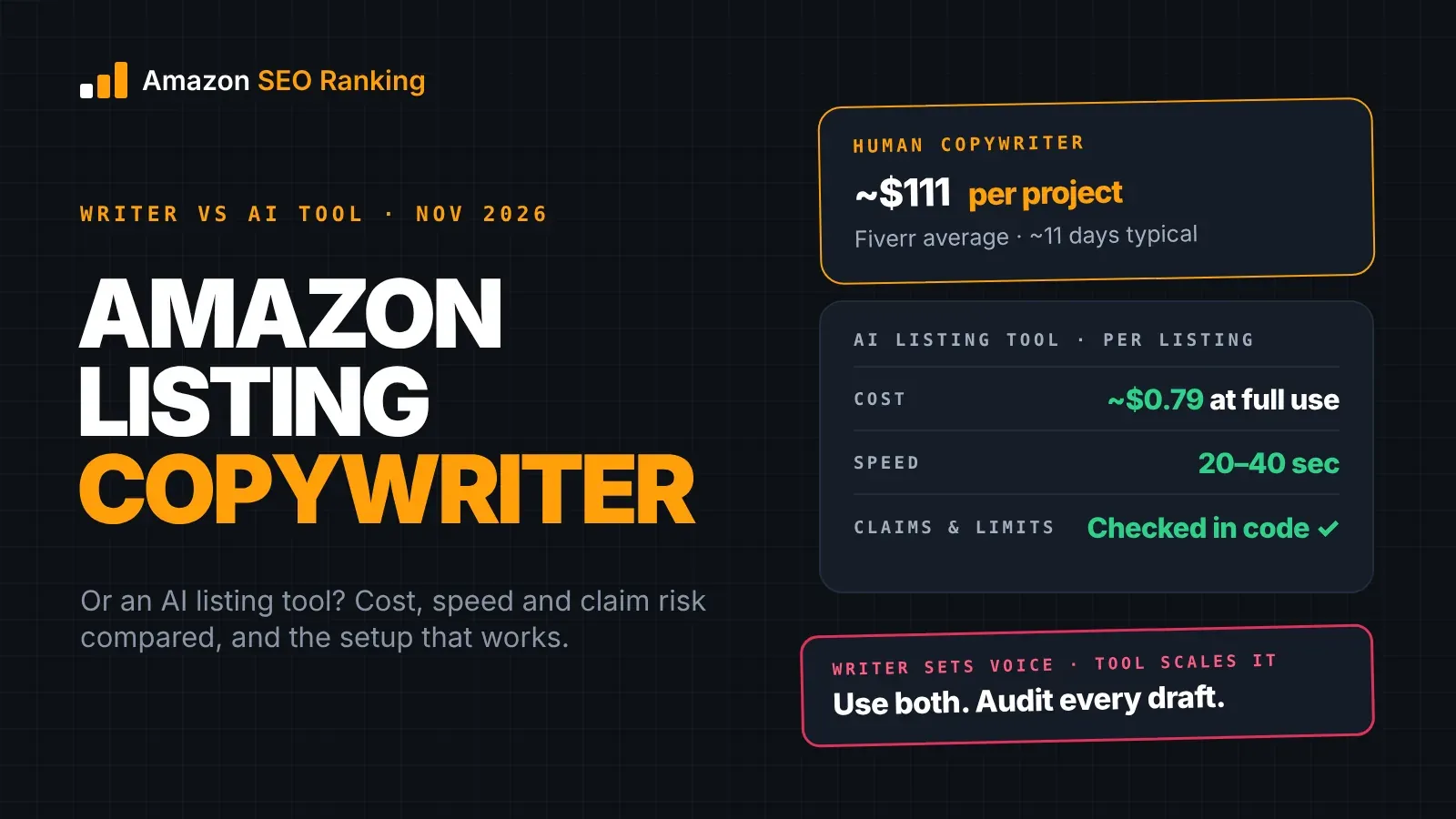
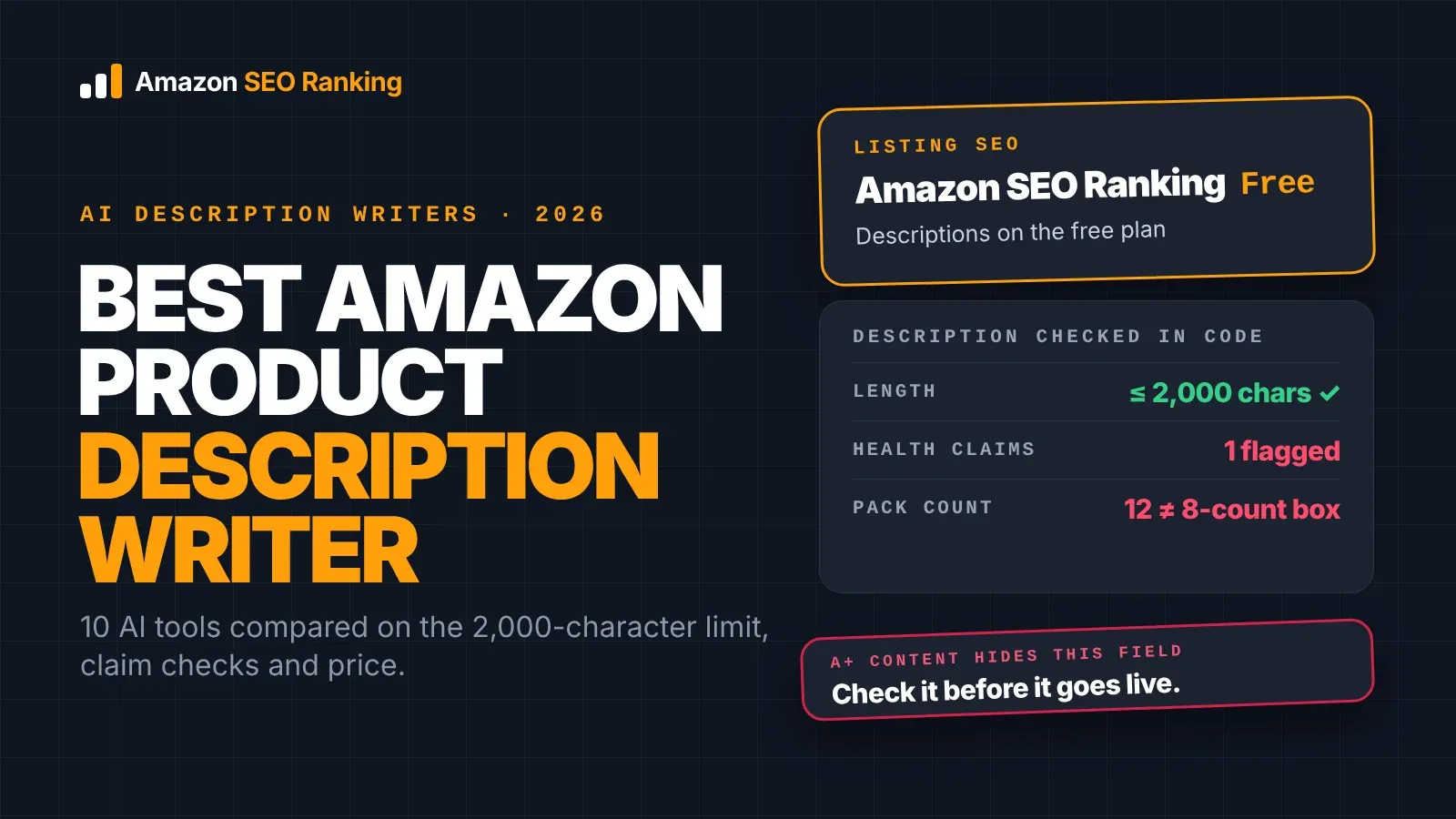
- AI copy that's safe to paste. Rewrites use your listing's spec table and your brand fact sheet as the source of truth, then get checked in code for health claims, unsupported claims, pack-count mismatches and Amazon's length limits. A research tool's AI writer doesn't know your product is an 8-count box; ours flags "20 packets" before you publish it.
- A draft audit before each change. Score edited copy against your live images and rating, and see the before-and-after score before you save it in Seller Central.
- Keyword volume to finish the job. Search volume for up to 1,000 keywords per check in 16 marketplaces on Pro (Free shows the first 3 results of each search), so the keywords from your research end up in the right fields.
If you're launching in several storefronts, the audit and rewrite cover 23 Amazon marketplaces, and each rewrite comes back in that marketplace's language. Our Amazon listing optimization tool page shows the full before-and-after. For the competitor side, our guide to the best Amazon competitor analysis tools covers what each tool shows about the listings above yours.
Everything You Need to Know About Amazon Research Tool Software
Ratings are our editorial view of the research tools, based on published features and pricing on 19 November 2026. Our own row isn't rated, since it does a different job.
| Tool | Job | Strengths | Limits | Free Option | Ease of Use | Affordability |
|---|---|---|---|---|---|---|
| Product Opportunity Explorer | Niche demand | Amazon's own data; reviews and returns per niche | Needs a Professional account; no product history or suppliers | Yes, with account | ⭐⭐⭐ | ⭐⭐⭐⭐⭐ |
| Jungle Scout | Private-label research | Guided flow; supplier database; market share on top tier | No free plan; estimates vary by category | No | ⭐⭐⭐⭐ | ⭐⭐⭐ |
| Helium 10 | Research plus keywords and PPC | Widest suite; Xray on every search page | Higher price; Platinum keyword cap | Limited | ⭐⭐⭐ | ⭐⭐ |
| Keepa | Recorded history | Price and rank history; low Pro price | No keyword or listing analysis; euros only | Charts free | ⭐⭐⭐ | ⭐⭐⭐⭐⭐ |
| SmartScout | Wholesale and brand mapping | Brand and seller maps; Traffic Graph | Heavy for one product; price changed in 2026 | No | ⭐⭐⭐ | ⭐⭐⭐ |
| ZonGuru | Research plus small-catalog operations | Supplier tools; free trial | Keyword-only listing score; SKU-based pricing | Trial | ⭐⭐⭐⭐ | ⭐⭐⭐ |
| AMZScout | Budget browser research | Low annual and lifetime pricing | No free plan; bundles hard to compare | No | ⭐⭐⭐⭐ | ⭐⭐⭐⭐ |
| Amazon SEO Ranking | Listing audit and rewrite after launch | Published 12-criteria score; checked AI copy; 23 storefronts | No product research, sales estimates or price history | 3 audits/mo, no card | Not rated (different job) | Not rated (different job) |
You've Picked the Product. Now Make the Listing Rank.
Amazon SEO Ranking does the part research tools hand back to you. It scores your live listing against 12 published criteria in about 20 seconds (auditing and drafting fixes by hand takes around an hour), so every lost point has a reason, and it rewrites the fields that failed using your own spec table and brand facts. Every rewrite is checked for length limits, unsupported claims and pack-count mismatches before you see it, and you can score it as a draft before it goes live.
It's built for private-label sellers who've recently launched or whose listing stalled after launch, sellers expanding into new Amazon storefronts, and agencies that need a score a client can check line by line. Trusted by eRetail Search specialists at Nestlé and eCommerce SEO services agencies such as Reach AI.
Unlike the limited free plans of the big suites, the free plan runs 3 complete audits a month, with AI fixes and no credit card required. Before launch, check your draft copy free in the Character Limit Checker. Once your ASIN is live, run an audit on it, then see Pro and Agency pricing when you need bulk runs, full keyword research or the Claude connector. Monthly plans start with a 7-day free trial.
FAQ
What software do people use for Amazon product research?
People use Amazon's Product Opportunity Explorer, Jungle Scout, Helium 10 and Keepa for Amazon product research more than any other software. Opportunity Explorer is free with a Professional selling account and shows Amazon's own demand data by niche. Jungle Scout (from $49/mo) and Helium 10 (Platinum $129/mo) add modelled sales estimates and product databases. Keepa (Pro €29/mo) records price and sales rank history, and wholesale sellers often add SmartScout.
What is the best Amazon product research tool?
The best Amazon product research tool for most new private-label sellers is Jungle Scout, because its Product Database, Opportunity Finder and Supplier Database follow the order you'll research in. Helium 10 is the better pick if you also want keyword and PPC tools in one subscription. Pair either one with Amazon's free Product Opportunity Explorer and Keepa's price history to check the estimates.
Is there a free Amazon product research tool?
There is a free Amazon product research tool in Seller Central: Product Opportunity Explorer, which has no fee beyond a $39.99/mo Professional selling account. Keepa's price and sales rank charts are also free in its browser extension. Helium 10 offers a limited free plan with a few tools and daily usage caps. Together they cover demand, history and some product estimates without a paid subscription.
How accurate is an Amazon sales estimator?
An Amazon sales estimator is accurate enough to compare products but not to forecast your exact orders. In EcomCrew's 2026 test of 25 products, Helium 10 came closer than Jungle Scout on 18 of them, yet still ran about 51% below actual sales on average. Every estimator converts Best Sellers Rank into units, so results vary by category and season. Check any estimate against Opportunity Explorer's niche data and Keepa's rank history before ordering stock.
Is Helium 10 or Jungle Scout better for product research?
Helium 10 or Jungle Scout is better for product research depending on what else you need: Jungle Scout for a guided flow and supplier database, Helium 10 for keyword and PPC tools in the same login. Jungle Scout starts at $49/mo with no free plan, while Helium 10 has a limited free plan and Platinum at $129/mo. In EcomCrew's independent 2026 test, Helium 10's sales estimates were closer on 18 of 25 products.
Is Amazon Product Opportunity Explorer free?
Amazon Product Opportunity Explorer is free in the sense that Amazon charges no separate fee for it. You need a Professional selling account, which Amazon lists at $39.99/mo plus selling fees, and you open it in Seller Central under Growth. It shows search volume, purchase behavior, reviews and return data by niche.
Can one tool handle product research and listing optimization?
One tool can cover product research and listing optimization in the large suites, but the listing side is usually the weaker half. Helium 10, Jungle Scout and ZonGuru include listing builders, and none of them publishes how its listing score is calculated. Many sellers use a research suite for a month to pick the product, then a dedicated listing tool for the ongoing work: Amazon SEO Ranking Pro is $79/mo against $129/mo for Helium 10 Platinum. Its free plan audits 3 live listings a month against 12 published criteria.
Does Amazon SEO Ranking do product research?
Amazon SEO Ranking does not do product research: it has no product database, sales estimates, niche scores or price history. It audits a live listing (one with an ASIN) against 12 published criteria and rewrites the fields that failed, with every rewrite checked for claims, pack counts and Amazon's length limits. Use a research tool to pick the product, then Amazon SEO Ranking to make its listing rank. The free plan includes 3 audits a month with no credit card.
Picked your product? Score the live listing free and see what to fix first.
Audit My Listing Free