The best Amazon keyword search volume tool is the one whose estimates you can check and act on, because no tool shows exact Amazon search counts. Amazon doesn't publish them. The closest thing to real numbers is Amazon's own Search Query Performance report, and it only covers queries that already led shoppers to your brand.
Every other figure, in every tool, is an estimate. So the useful question is which tool tells you how much demand a phrase has, how hard it is to rank for, and whether your listing already uses it. For sellers writing or fixing live listings, we think that's Amazon SEO Ranking: it shows volume built from Amazon search data in 16 marketplaces, scores competition next to each keyword, and audits whether the keywords landed in your listing. Helium 10 has the largest keyword toolset, SellerSprite layers Brand Analytics data on top of its estimates for less money, and Brand Analytics itself is the free reference to test them all against.
Amazon SEO Ranking is our product, so weigh our verdict with that in mind. The other nine reviews use each vendor's published plans and features as of 3 November 2026, and each says what that tool does better than ours.
Key Takeaways (TL;DR)
- The best Amazon keyword search volume tool overall: Amazon SEO Ranking, for sellers whose next step is a listing. It pairs volume with a competition score, keeps monthly volume snapshots in Saved Lists, and audits whether the keywords made it into the title, bullets and backend field.
- Why you need it: Brand Analytics ranks search terms but shows counts only for queries that reached your own products. In our test, "non slip yoga mat" showed about 2,393 US searches a month and "yoga mat non slip" about 336, so guessing from autocomplete misses a 7x gap.
- Who it's for: solo sellers and small catalogs, sellers rewriting live listings, brands in several Amazon storefronts, and agencies managing client catalogs.
- How to choose: start from what you'll do with the volume, check competition next to it, and test the tool's figures against your own Search Query Performance data.
- Expected price: Amazon SEO Ranking has a free keyword preview with no card, Pro at $79/mo and Agency at $249/mo, with flat pricing at any catalog size. Across the market, volume data runs from $0 (Brand Analytics, with Brand Registry) to $749/mo (MerchantWords Enterprise).
Best Amazon Keyword Search Volume Tools at a Glance
Prices are each vendor's published monthly rate on 3 November 2026 unless marked. Most are cheaper on annual billing.
| Company | Best For | Key Features | Pricing |
|---|---|---|---|
| Amazon SEO Ranking | Turning volume data into a listing that ranks | Volume in 16 marketplaces with a competition score, Saved Lists with monthly snapshots, keyword ideas graded by relevance, listing audit on 12 published criteria | Free preview, Pro $79/mo, Agency $249/mo |
| Amazon Brand Analytics | The free reference for brand-registered sellers | Search Frequency Rank, Search Query Performance with query volume for your brand | Free with Brand Registry |
| Helium 10 | Sellers who want the biggest keyword toolset in one suite | Cerebro (with Magnet merged in), volume history graphs, Keyword Tracker | Free plan (2 uses/day), Platinum $129/mo, Diamond $359/mo |
| Jungle Scout | New sellers checking demand before launch | Keyword Scout with exact and broad match volume, reverse ASIN, up to 2 years of history | Starter $49/mo, Growth Accelerator $79/mo, Brand Owner + CI $149/mo |
| SellerApp | Brands that want keyword data next to PPC tools | Keyword Research with relevance score, CPC and conversion rate, Reverse ASIN, 18+ marketplaces | Freemium, Pro $99/mo, Smart $250/mo after a 3-month intro rate |
| Data Dive | Experienced sellers building keyword lists from competitors | Master Keyword List, Rank Radar, API and MCP on higher plans | $39, $149 or $490/mo |
| SellerSprite | Budget keyword research with Brand Analytics data | Weekly and monthly ABA data, keyword conversion rate, 20-ASIN reverse lookup | Free plan, paid from about $39/mo |
| MerchantWords | Keyword-only research across 11 marketplaces | Autocomplete-based estimates, 13-month history, seasonality | Silver $35/mo to Enterprise $749/mo |
| ZonGuru | Small catalogs that want a ranked keyword shortlist | Keywords on Fire with eScore, standalone keyword plan | Keywords on Fire $19/mo, Researcher from $29/mo (annual) |
| AMZScout | Product research with a simple keyword checker | Keyword Search with volume history, Reverse ASIN, Keyword Tracker | $59.99/mo or $399.99/yr |
What Is an Amazon Keyword Search Volume Tool?
An Amazon keyword search volume tool estimates how many times shoppers type a phrase into Amazon's search bar in a month. Sellers use those numbers to decide which phrases go in the title, which go in bullets and Item Highlights, which belong in the backend search terms, and which to bid on in Sponsored Products.
Amazon doesn't release exact search counts for the whole marketplace. Brand Analytics shows a Search Frequency Rank for top terms, where 1 is the most-searched term that week, and its Search Query Performance dashboard lists the top queries that led customers to your products, with their volume. Third-party tools fill the gap with models.
Those models start from different places. Some build on Amazon data feeds and Brand Analytics, some on autocomplete suggestions, and some on the ranking data of competitor ASINs. MerchantWords, for example, says it captures phrases from Amazon autocomplete and spreads its estimate of monthly shopper visits across them. Helium 10 says its figures count normalized searches, where one shopper repeating a search in a short window counts once. The two methods produce different numbers for the same phrase.
Why Do You Need an Amazon Search Volume Tool?
Title space got scarce in 2026. Titles in most categories are now capped at 75 characters, so a seller has room for the main keyword and one or two modifiers. Picking the wrong modifier costs more than it used to, and autocomplete alone can't tell you which one shoppers type.
The gaps are large. We ran ten yoga mat phrases through Amazon SEO Ranking's keyword tools (US, estimated monthly searches, 3 November 2026):
| Phrase | Est. monthly US searches |
|---|---|
| yoga mat | ≈74,725 |
| yoga mats | ≈39,569 |
| yoga mat thick | ≈2,580 |
| non slip yoga mat | ≈2,393 |
| yoga mat for women | ≈822 |
| tpe yoga mat | ≈561 |
| extra thick yoga mat | ≈486 |
| yoga mat non slip | ≈336 |
| yoga mat with strap | ≈149 |
| yoga mat 8mm | ≈37 |
"Non slip yoga mat" is reported at about seven times "yoga mat non slip". Amazon indexes individual words, so one listing can match both orders, but the report tells you the phrasing shoppers prefer for the title. "Yoga mat 8mm" looks like a precise spec phrase and gets about 37 searches; "thick" gets 2,580. That's the difference between a modifier worth title space and one that belongs in the backend.
Marketplace matters as much. The same check on amazon.co.uk returned about 14,698 for "yoga mat" and about 74 for "yoga mat thick", against 2,580 in the US. A keyword list built on amazon.com doesn't carry over.
And the tools disagree with each other. In one side-by-side test, RevenueGeeks found MerchantWords reporting about 38,000 monthly searches for a keyword that Helium 10 put at 14,634. Neither number is exact. That's why the choice of tool, and knowing how to check it, matters.
Who Needs Amazon Keyword Search Volume Data?
Four groups get the most from volume data that connects to the listing. If you're still choosing a product or mainly running PPC, the research suites and ad tools reviewed below (Jungle Scout, Helium 10, SellerApp, SellerSprite) cover sales estimates and bid data that we don't.
Solo Sellers and Small Catalogs
A seller with a handful of ASINs wants to know which phrases to put in the next title update, without paying for a 20-tool suite to find out. Price matters, and so does trying the tool on their own keywords before paying.
Most tools here offer a trial, a money-back window or a heavily capped free plan. Amazon SEO Ranking's free account runs Search volume and Keyword ideas (first 3 results, 30 lookups a month) plus 3 full listing audits, with no credit card. Pro is $79 a month at any catalog size.
Sellers Rewriting Live Listings
A seller whose listing is live but not ranking needs to know three things: which phrases have volume, which ones they can realistically rank for, and whether the listing already contains them. Volume without the last two produces a keyword list that sits in a spreadsheet.
This is the job we built for. Amazon SEO Ranking shows a competition score next to each phrase, then audits the live listing against 12 published criteria, including title and bullet keyword quality. Every rewrite is checked against Amazon's 75-character title limit and the backend byte limit before you paste it.
Brands Selling in Several Amazon Storefronts
The yoga mat example shows why a US list fails in the UK. Brands in several storefronts need volume per marketplace, and a way to check that each storefront's listing reflects its own list rather than a translation of the US one.
Amazon SEO Ranking's search volume covers 16 marketplaces, including the UAE, Saudi Arabia, Egypt and India, and the listing audit and rewrite run in 23 Amazon storefronts, in each marketplace's language. The same ASIN can score differently on amazon.com and amazon.co.uk, and the audit shows which fixes each one needs.
Agencies Managing Client Catalogs
Agencies run keyword research for many products and many clients each month. Lookup limits, exports, a flat price and a score they can explain to a client matter more to them than any single feature.
Look closely at quotas. Helium 10 Platinum now caps Cerebro and Magnet at 100 searches a month, according to EcomCrew's report on the 2026 plan changes. Amazon SEO Ranking's Agency plan includes 10,000 keyword lookups a month, Keyword gap across up to 20 ASINs, white-label reports and API access, at a flat $249 regardless of how many SKUs a client has.
Best Amazon Search Volume Tools: In-Depth Reviews
The order below reflects how well each tool helps a seller pick keywords and get them into a listing that ranks. A tool lower down can still be the right pick if your main job is product research or ads.
1. Amazon SEO Ranking
Overview
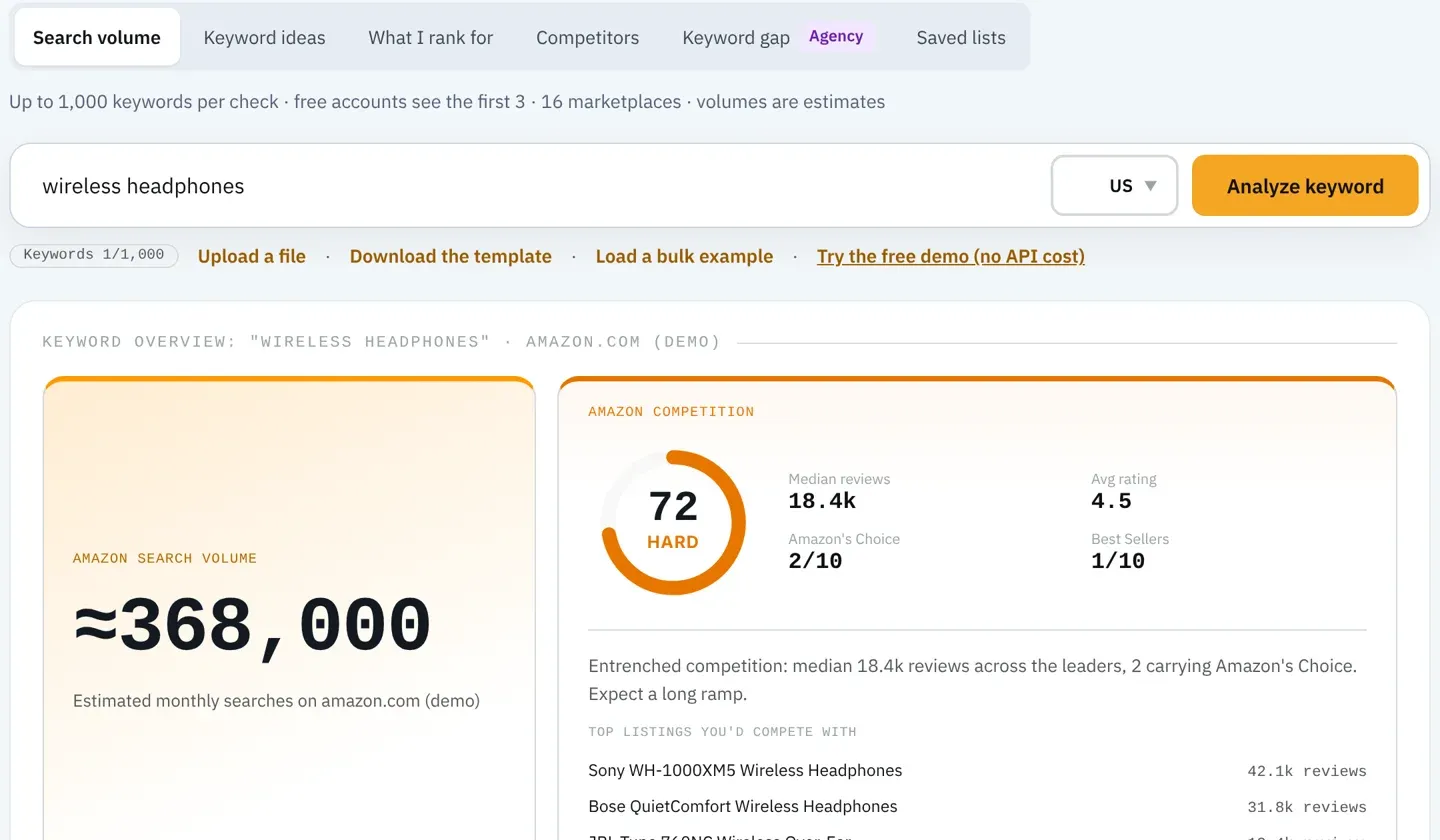
Amazon SEO Ranking is a self-serve tool built around one job: making a live Amazon listing rank better. Its keyword research shows monthly search volume built from Amazon on-platform search data in 16 marketplaces, with a computed competition score next to each phrase. Keyword ideas, what an ASIN already ranks for, Competitors and Keyword gap are available in the US, Egypt, Saudi Arabia and the UAE.
The keyword data connects to the rest of the tool. Once you've picked phrases, the audit pulls the live listing, scores it against 12 published criteria in 23 Amazon storefronts, and the AI Copy Rewriter fixes whichever criteria failed, using your phrases in a title, Item Highlights, bullets and backend terms checked in code for Amazon's limits.
Ideal For
The keyword tools fit sellers whose next step after research is the listing itself:
- Solo sellers who want to test keyword data on their own phrases for free
- Sellers rewriting live listings that don't rank for their main keywords
- Brands that need volume in the UAE, Saudi Arabia, Egypt or India as well as the US and Europe
- Agencies running keyword research and listing audits for several clients
- Teams that research keywords and write listings inside Claude
Top Features
These save the most time between a keyword list and a finished listing:
- Search volume with a competition score, computed from the review counts of the top listings and how many carry Amazon's Choice or Best Seller badges, for up to 1,000 keywords per lookup
- Keyword ideas graded Close match, Related or All, so off-topic phrases drop out before you sort
- Saved Lists that keep a monthly volume snapshot, so you can compare a phrase against last month without re-running it
- What I rank for, Competitors and Keyword gap (Agency, up to 20 ASINs) in 4 marketplaces
- The 12-criteria listing audit and a free Backend Search Terms Checker, which show whether your keywords landed where Amazon reads them
- Copy table, Add to workbook, and a Claude connector on Pro and Agency
Why We Stand Out?
Our keyword data feeds straight into the listing work. You check volume and competition, pick phrases, and the same account audits the live page against a scoring method we publish in full, so you can see exactly why a keyword placement lost points. The AI rewrite then targets the criteria that failed, inside Amazon's 75-character title limit and the backend byte limit. Our guide to how to rank for keywords on Amazon explains why placement decides whether the volume ever turns into traffic.
The competition score answers the question that follows every volume lookup: can this listing rank here? It's built from signals you can check on the results page yourself (review counts and badge density on the top listings), unlike opportunity scores whose formula isn't published. Low-volume terms are reported in steps rather than with false precision, so two phrases at ≈37 are both small and may not be the same size.
On price, Pro is $79 a month with 2,000 keyword lookups and the listing tools included, and Agency is $249, about 31% less than Helium 10 Diamond at $359. The free account runs a keyword preview and 3 full audits a month with no card.
Pros
- Volume built from Amazon search data in 16 marketplaces, with a competition score
- Saved Lists with monthly volume snapshots
- Keyword research and a published-method listing audit in one account
- Free keyword preview with no credit card; flat pricing regardless of catalog size
- Claude connector included from Pro
Cons
- The advanced keyword tools (Keyword ideas at full depth, What I rank for, Competitors, Keyword gap) cover only 4 marketplaces: US, Egypt, Saudi Arabia and UAE
- No product research, sales estimates or PPC bid data; if you're still choosing what to sell, Jungle Scout or Helium 10 fits better
- No keyword conversion rate data, which SellerSprite and SellerApp offer
Pricing
The Free plan includes a keyword preview (first 3 results, 30 lookups a month) and 3 full listing audits a month. Pro is $79/mo or $799/yr, with 2,000 keyword lookups and 100 audits. Agency is $249/mo or $2,490/yr, with 10,000 keyword lookups, Keyword gap, white-label reports and API access. Enterprise is custom.
Monthly plans start with a 7-day free trial, and every charge has a 14-day money-back guarantee.
Final Verdict
If you research keywords to write or fix a listing, Amazon SEO Ranking covers both jobs in one place: volume and competition, then a published audit and a rewrite that uses the phrases you picked. Sellers who need reverse ASIN data across many European or Asian markets, or PPC bid estimates, should pair it with a keyword-first tool. Try the Amazon keyword research tool on your own phrases first.
2. Amazon Brand Analytics

Overview
Amazon Brand Analytics is Amazon's free reporting suite in Seller Central, open to brands enrolled in Brand Registry. For keywords, two reports matter. Top Search Terms ranks search terms by Search Frequency Rank and shows the top three clicked products for each, with click share and conversion share. Search Query Performance shows the queries that led shoppers to your products, with their search query volume, impressions, clicks, add-to-carts and purchases.
It's first-party data. It also has gaps: Top Search Terms gives ranks, and Search Query Performance only covers queries connected to your own brand.
Ideal For
Brand Analytics is the starting point for any brand that qualifies:
- Brand-registered sellers who want Amazon's own search data
- Brands checking whether a third-party tool's estimates hold up
- PPC managers tracking click and conversion share on their top queries
- Sellers who don't want another subscription
Top Features
The reports are basic in layout and unique in source:
- Search Frequency Rank for top search terms, weekly and by category
- Top three clicked products per term, with click and conversion share
- Search Query Performance with query volume and funnel data for your brand
- Filters by ASIN, brand, category or keyword
Why They Stand Out?
No outside tool sees Amazon's first-party numbers the way Brand Analytics does. If you're brand registered, it's one of the smartest benchmarks for any third-party tool: compare the order of your top 20 Search Query Performance queries with the order a tool gives them.
Click and conversion share for the top three products also show who owns a keyword, which volume alone doesn't.
Pros
- Free with Brand Registry
- First-party Amazon data
- Click and conversion share by term
- Search Query Performance gives real volume for your brand's queries
Cons
- Only brand-registered sellers can use it
- Top Search Terms shows ranks, not monthly counts
- Search Query Performance only covers queries that reached your products, so new keywords and competitor terms are missing
- No keyword ideas, relevance grading or listing check
Pricing
Free with a Seller Central account enrolled in Brand Registry.
Final Verdict
For the best search volume Amazon itself publishes, use Brand Analytics as the reference. It can't tell you the volume of a phrase you don't rank for yet, which is the question most keyword research starts with, so pair it with a tool that estimates the rest.
3. Helium 10
Overview
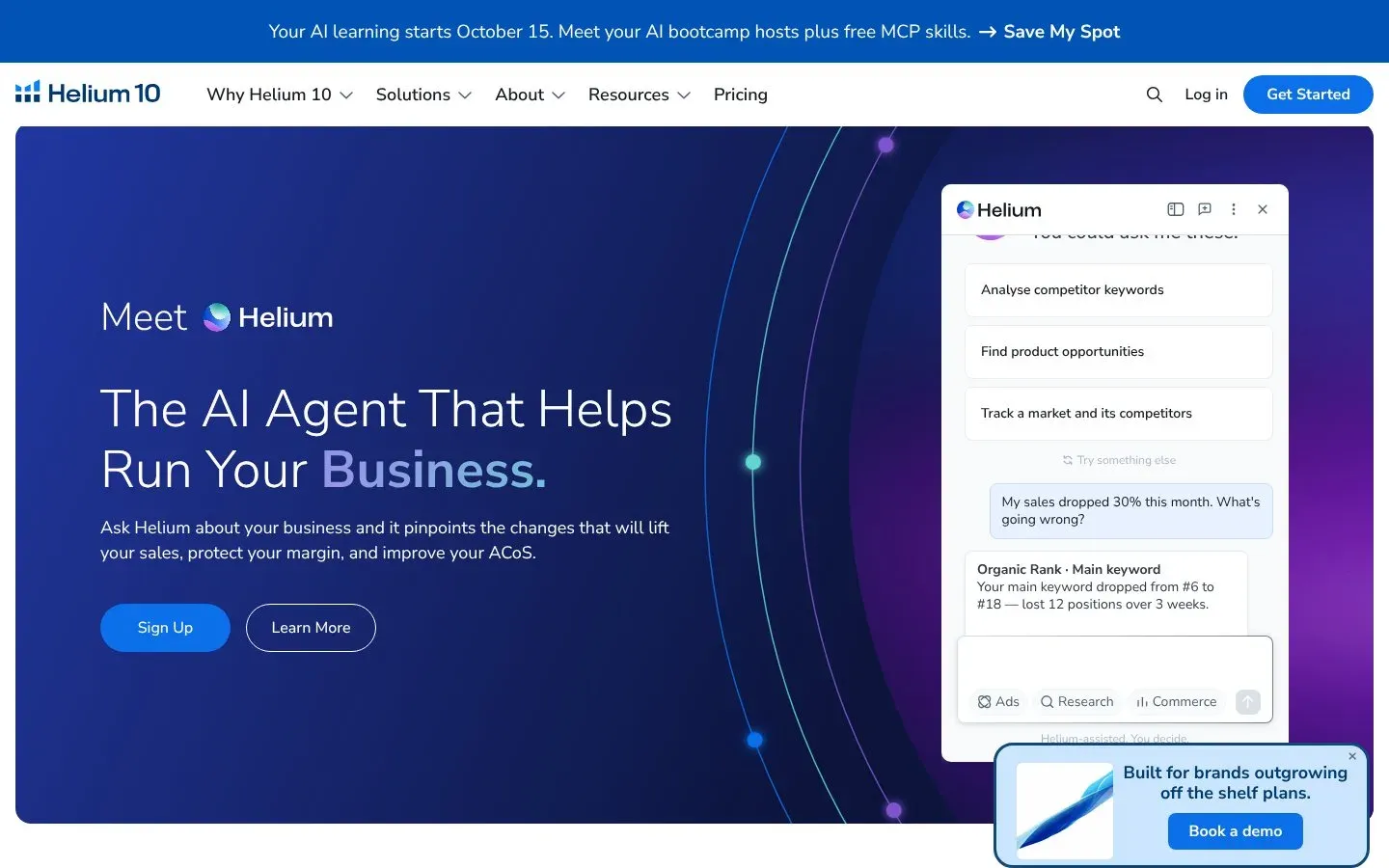
Helium 10 is the largest Amazon seller suite, and Cerebro is its keyword research tool. In January 2026 Helium 10 merged Magnet, its seed-keyword tool, into Cerebro, so one tool now handles reverse ASIN lookups and keyword discovery. Volume history graphs run from 30 days to all time.
The suite also covers product research, listings, ads and operations. Its 2026 pricing changes matter for keyword buyers: the Starter plan is gone, and Platinum now caps keyword research.
Ideal For
Helium 10 fits sellers who want keyword data inside one large suite:
- Private label sellers running research, listings and PPC together
- Sellers who want reverse ASIN data on up to 10 competitors at once
- Brands that track keyword rank over long periods
- Teams that will use most of the 20-plus tools
Top Features
The keyword tools are deep and connected to the rest of the suite:
- Cerebro reverse ASIN and keyword discovery, with Magnet merged in
- Search volume history graphs (30 days, 90 days, 1 year, all time)
- Keyword Tracker for organic rank
- Chrome extension showing volume on Amazon search pages
Why They Stand Out?
Helium 10 is one of the strongest choices for sellers who want the most keyword data in one login. Cerebro shows every keyword a competitor ranks for with volume, rank position and an opportunity score, and it feeds the Listing Builder directly.
It also reaches more marketplaces for reverse ASIN research than our 4-marketplace advanced tools.
Pros
- Largest keyword toolset in this list
- Long volume history
- Keyword data tied to listings, ads and tracking
- A free plan to test Cerebro
Cons
- Platinum caps Cerebro and Magnet at 100 searches a month at renewal
- Platinum costs $129/mo month to month, up from $99
- The opportunity score's formula isn't published, and the Listing Analyzer score doesn't explain itself
- You pay for many tools you won't use if you only need keyword volume
Pricing
The Free plan allows 2 Cerebro and Magnet uses a day. Platinum is $129/mo, or $99/mo billed annually. Diamond is $359/mo, or $279/mo billed annually, with no monthly cap on keyword research. Enterprise is custom.
Amazon SEO Ranking Pro costs 39% less than Platinum month to month ($79 vs $129) with 2,000 keyword lookups, and Agency costs 31% less than Diamond ($249 vs $359).
Final Verdict
Helium 10 suits sellers who want the biggest keyword toolset and will use the suite around it. If keyword volume and listing work are most of what you need, the Platinum cap and price make it a hard buy.
4. Jungle Scout
Overview
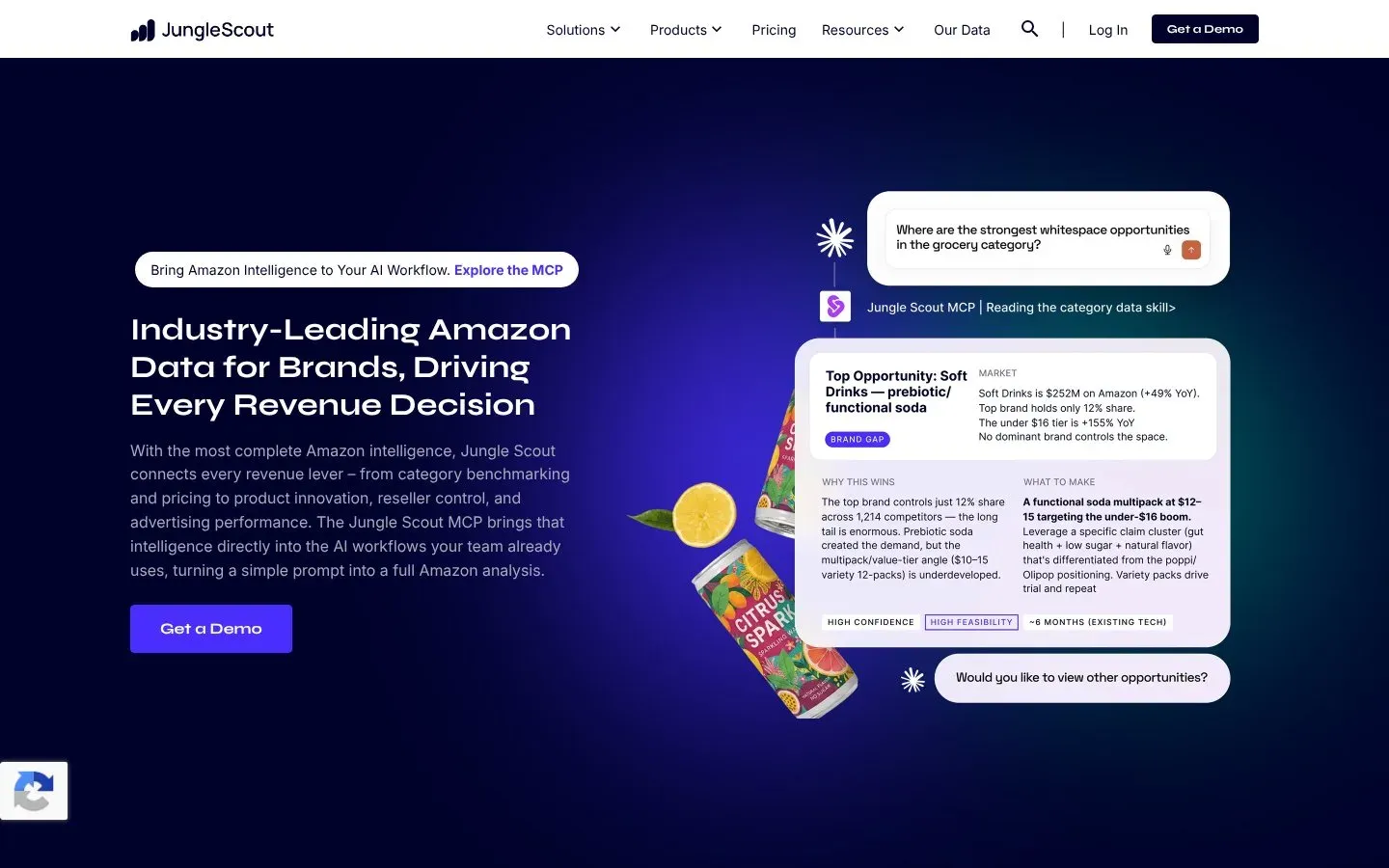
Jungle Scout is best known for product research, and Keyword Scout is its keyword tool. It shows exact and broad match search volume, reverse ASIN results and multi-ASIN comparison of up to 10 products, with organic and sponsored positions.
Seller plans are sold as Catalyst (Starter, Growth Accelerator, Brand Owner + CI), and history depth depends on the plan. Cobalt, its enterprise tier, extends keyword coverage to up to 19 marketplaces.
Ideal For
Jungle Scout fits sellers early in the product cycle:
- New sellers checking demand before choosing a product
- Private label sellers comparing niches
- Sellers who want exact and broad match volume side by side
- Beginners who want a guided interface
Top Features
Keyword Scout covers the basics well:
- Exact and broad match search volume
- Reverse ASIN and multi-ASIN comparison (up to 10)
- Keyword history from 1 month (Starter) to 2 years (Brand Owner + CI)
- Sponsored and PPC data on higher plans
Why They Stand Out?
Jungle Scout is one of the smartest choices for a seller who hasn't launched yet. Keyword Scout's volume sits next to sales estimates and the Product Database, so demand and competition can be checked in one place.
Showing exact and broad match volume separately helps sellers size PPC match types.
Pros
- Exact and broad match volume
- Beginner-friendly interface
- Keyword data tied to product research
- Annual Growth Accelerator rate ($588/yr) is low for what it includes
Cons
- No free plan; a 7-day money-back guarantee instead
- Starter keeps only 1 month of keyword history
- The listing score doesn't publish its method
- Extra users cost $49/mo each
Pricing
Starter is $49/mo ($29/mo billed annually). Growth Accelerator is $79/mo ($49/mo billed annually). Brand Owner + CI is $149/mo ($129/mo billed annually). Cobalt is custom.
Growth Accelerator is level with Amazon SEO Ranking Pro at $79/mo, though Pro includes a free tier to test first and listing audits rather than product research.
Final Verdict
Jungle Scout suits sellers choosing products who want keyword volume next to sales data. Once the product is live and the work is the listing, its keyword data gives less to act on than a tool that checks placement.
5. SellerApp
Overview
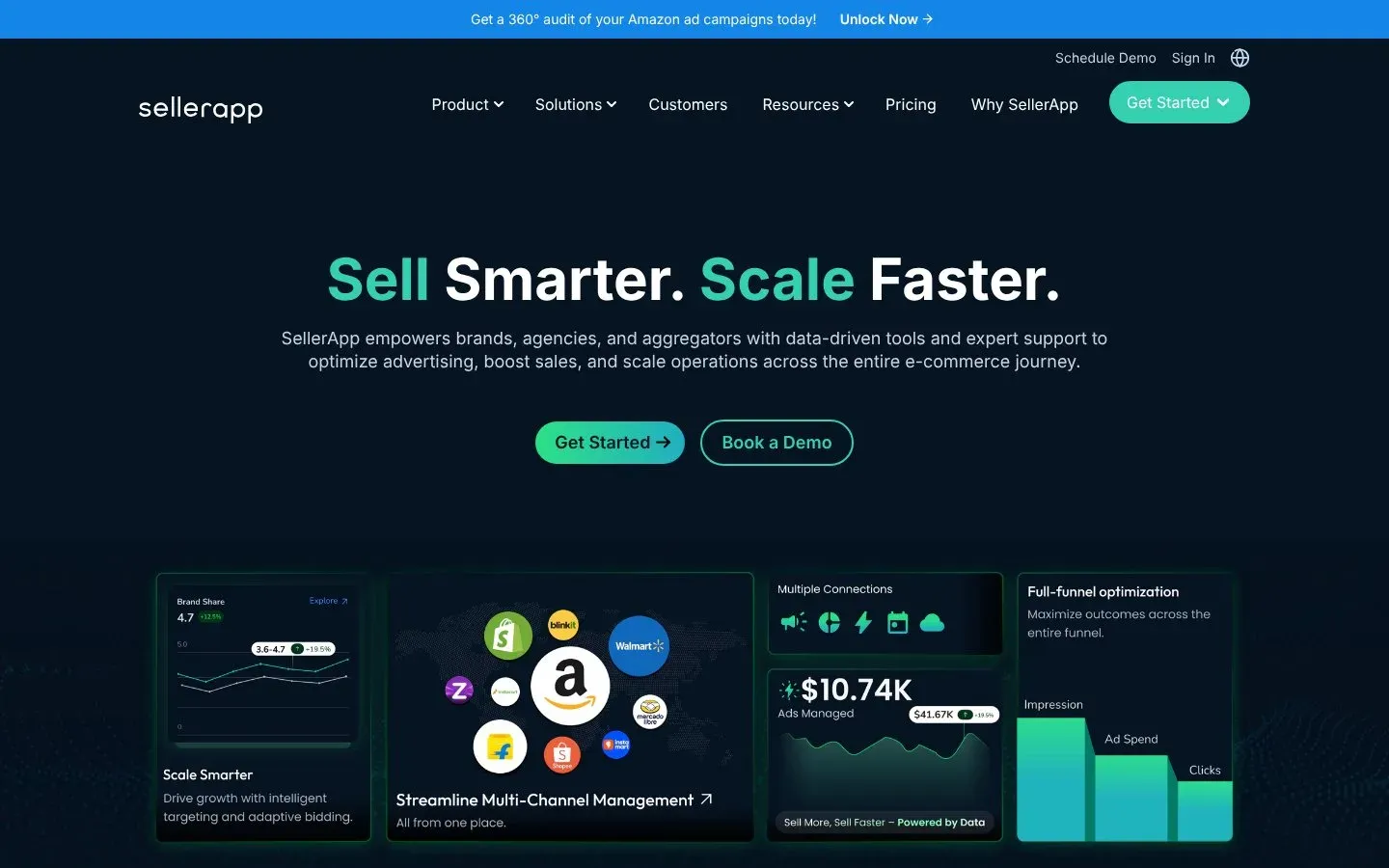
SellerApp is an Amazon growth suite whose Keyword Research tool shows match type, a relevance score, search volume, CPC, estimated orders a month and conversion rate for each phrase. Reverse ASIN pulls the keywords a competitor ranks for, and keyword research covers 18+ Amazon marketplaces.
It's the closest like-for-like competitor to a listing tool in this list, with a Listing Quality Index, PPC automation, an API and managed services.
Ideal For
SellerApp fits brands that want keyword data and ads in one place:
- Brands spending heavily on Amazon PPC
- Sellers who want conversion rate and CPC next to volume
- Agencies that need an API and white-label reporting
- Sellers in many marketplaces
Top Features
The keyword tools lean toward advertising:
- Keyword Research with relevance score, CPC, estimated orders and conversion rate
- Reverse ASIN for competitor keywords
- Keyword tracking
- Listing Quality Index and PPC automation on paid plans
Why They Stand Out?
SellerApp is one of the strongest choices for brands that want keyword volume, CPC and conversion data feeding the same account that runs their ads. Its relevance score filters noise before you sort by volume.
Its keyword coverage, at 18+ marketplaces, is wider than our advanced keyword tools.
Pros
- Conversion rate, CPC and estimated orders per keyword
- 18+ marketplaces for keyword research
- PPC automation in the same account
- A freemium plan
Cons
- The Listing Quality Index's weights aren't published
- Smart's $149 rate lasts only three months, then rises to $250/mo
- Pro costs $99/mo, 20% more than Amazon SEO Ranking Pro
- Keyword and listing features are spread across a large suite
Pricing
SellerApp has a Freemium plan for basic research. Pro starts at $99/mo. Smart is $149/mo for the first three months, then $250/mo. Custom plans are on quote.
Final Verdict
SellerApp suits brands that want keyword data and PPC automation together. If you don't need the ads side, you're paying more for keyword features you can get with a listing audit for $79.
6. Data Dive
Overview
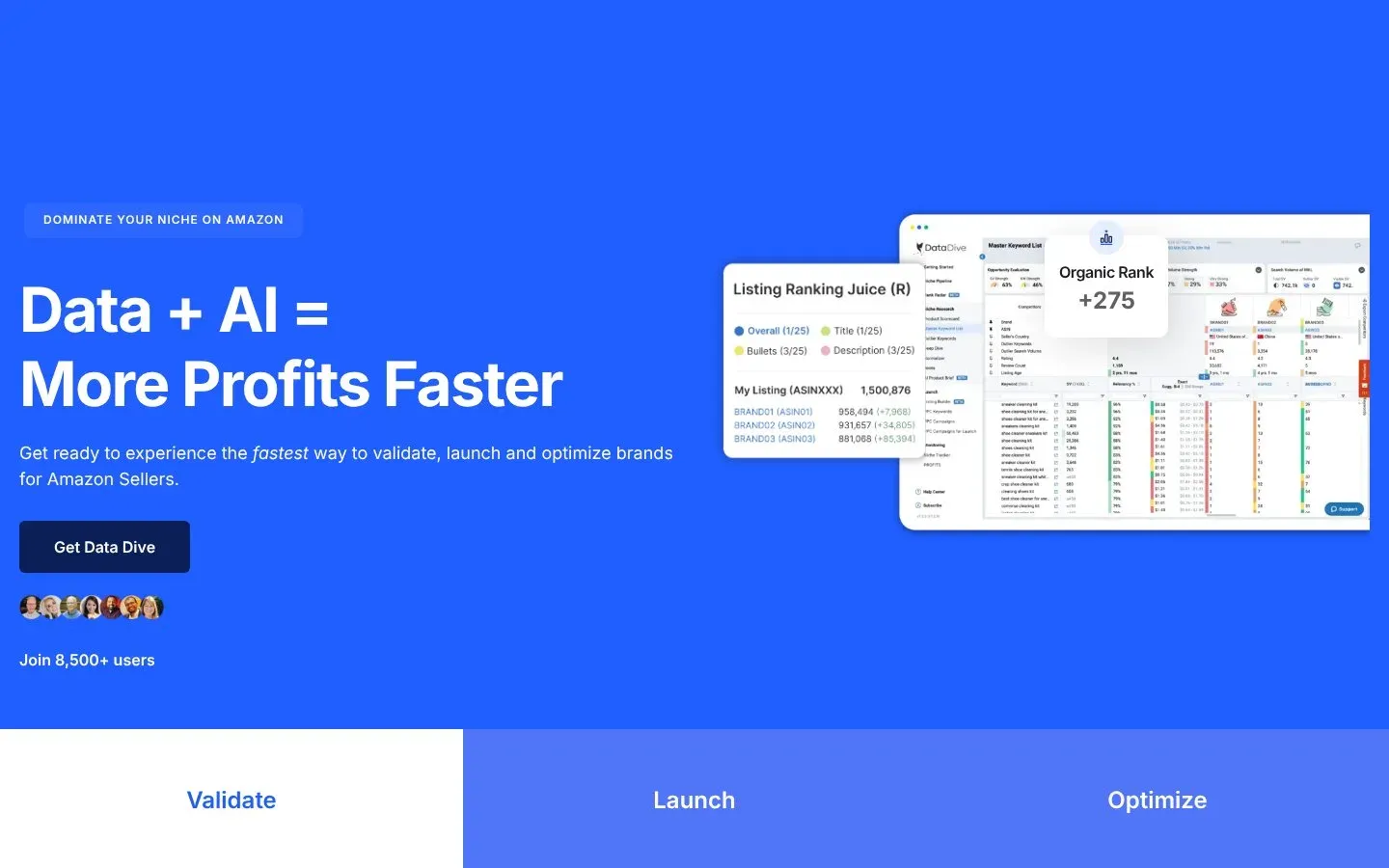
Data Dive is a keyword-first toolkit for experienced private label sellers. A "Dive" pulls the top competitor ASINs for a niche and builds a Master Keyword List from their rankings and search volume, filtered by relevance. That list feeds the AI Copywriter and Rank Radar tracking.
It's built around a method: find every keyword that sells in a niche, then make sure the listing covers the important ones.
Ideal For
Data Dive fits sellers who like working through large keyword lists:
- Experienced sellers in competitive niches
- Agencies that run a structured keyword process
- Sellers who want keyword data in an AI assistant via MCP
- Teams tracking rank on hundreds of keywords per product
Top Features
Everything starts from competitor rankings:
- Master Keyword List from top competitors' ranking data
- Rank Radar: 25 keywords on Starter, 1,000 on Standard, 12,000 on Enterprise
- AI Copywriter that writes from the chosen keywords
- API and MCP access on Standard and Enterprise
Why They Stand Out?
Data Dive is one of the smartest choices for sellers who want to know exactly which keywords competitors win and which they miss. Starting from real rankings keeps the list close to what sells in the niche.
The Rank Radar limits on Standard and Enterprise suit brands tracking many products.
Pros
- Keyword lists built from competitors' rankings
- Clear process from research to copy
- Rank tracking included
- API and MCP on higher plans
Cons
- No free plan
- Steeper learning curve than most tools here
- Starter tracks only 25 keywords
- Top plan reaches $490/mo
Pricing
Starter is $39/mo ($32/mo annually), Standard $149/mo ($124/mo annually) and Enterprise $490/mo ($408/mo annually).
Final Verdict
Data Dive suits experienced sellers who want the deepest competitor-based keyword view and will put in the time. For a quick volume check or a seller with a few ASINs, it's more process than needed.
7. SellerSprite
Overview
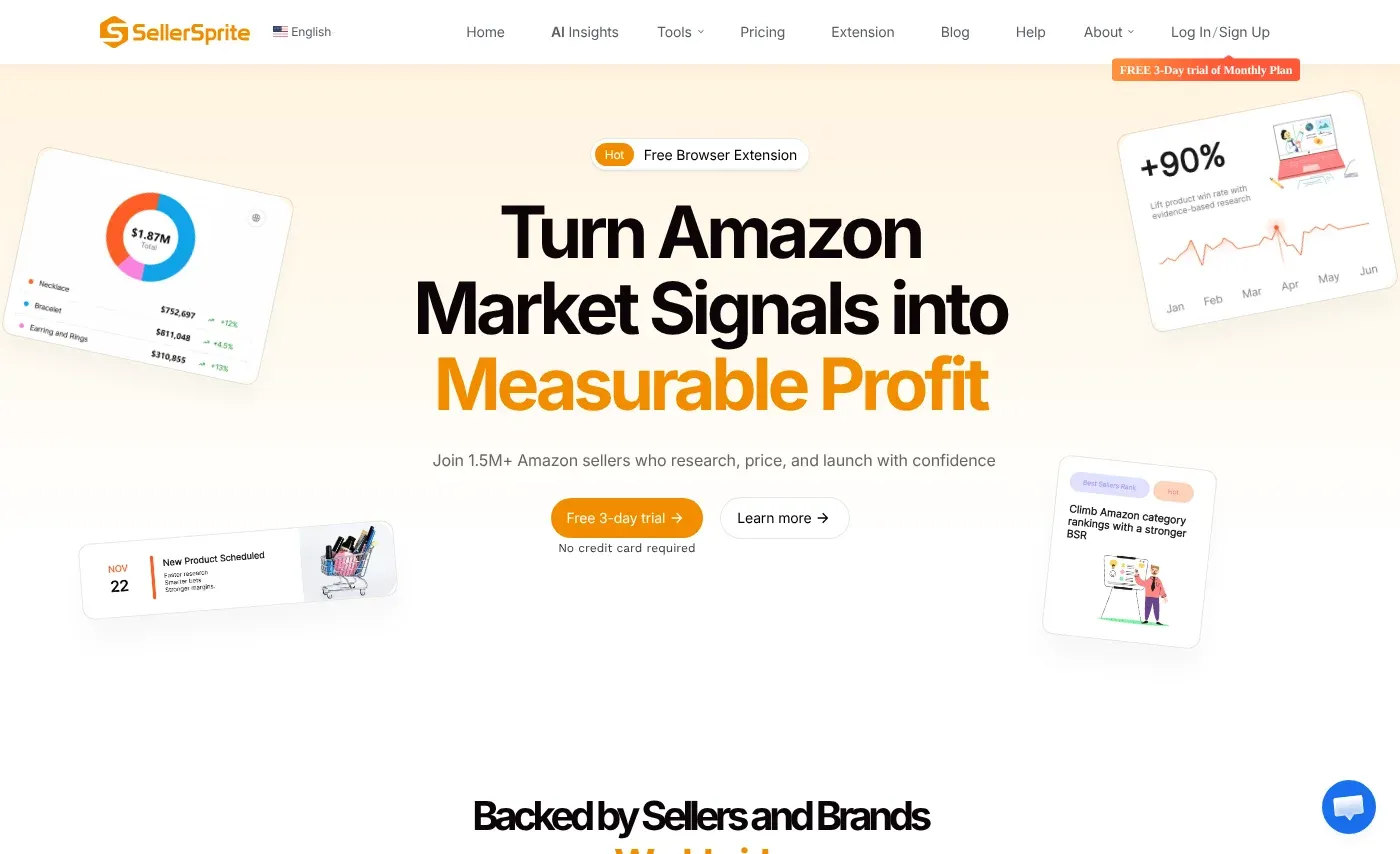
SellerSprite is a keyword and market research tool with low prices. Its keyword research layers weekly and monthly Brand Analytics data on top of its own estimates, and it shows a keyword conversion rate, the share of searches that end in a purchase.
It covers 9 Amazon marketplaces: US, UK, Germany, France, Italy, Spain, Japan, India and Canada.
Ideal For
SellerSprite fits budget-conscious sellers who want deep keyword data:
- Sellers moving off Helium 10 to cut costs
- Researchers who reverse-lookup many competitor ASINs at once
- PPC managers who want conversion rate next to volume
- Teams that want MCP access for AI assistants
Top Features
The keyword tools are the core of the product:
- Keyword Miner with volume, trends and conversion rate
- Brand Analytics research, weekly and monthly
- Reverse ASIN on up to 20 ASINs at once
- Free AI Listing Builder
Why They Stand Out?
SellerSprite is one of the strongest budget choices for keyword research. Conversion rate changes which keyword goes in the title: a phrase with high volume and a low purchase rate may deserve less space than a smaller phrase that converts.
It beats Amazon SEO Ranking on keyword depth, conversion data and price at entry. Its 3-day trial needs no credit card.
Pros
- Brand Analytics data alongside estimates
- Keyword conversion rate
- 20-ASIN reverse lookup
- Free plan and low paid entry
Cons
- 9 marketplaces, with no Middle East coverage in the web app
- Plan names and prices vary between its own pages, so check before buying
- The listing builder writes copy but doesn't audit the live listing
- API access is sold separately per endpoint
Pricing
SellerSprite has a free plan. Paid plans run from about $39 to $189 a month, with discounts on annual billing.
Final Verdict
SellerSprite suits sellers who want cheap, deep keyword research with Brand Analytics data. You'll still need to check that the keywords fit and landed in the listing.
8. MerchantWords
Overview
MerchantWords is a keyword-only research tool that has logged Amazon shopper searches since 2012. It says its data comes from the Amazon autocomplete bar, and that it spreads an estimate of total monthly shopper visits across the phrases it captures.
It shows estimated volume, a 13-month history, seasonality and a depth score in 11 Amazon marketplaces.
Ideal For
MerchantWords fits sellers who want keyword data and nothing else:
- Listing writers who need long-tail ideas fast
- Sellers studying seasonality before stocking up
- Agencies that want unlimited searches on one plan
- KDP authors and sellers outside the big suites
Top Features
The tool is focused on search terms:
- Classic Search with volume, depth, seasonality and category
- 13-month search history per keyword
- Keyword Multiplier for long-tail combinations
- Emerging Trends for terms with rising volume
Why They Stand Out?
MerchantWords is one of the most focused keyword tools here. It explains its method publicly, which few vendors do, and its seasonality view helps with stock planning.
Platinum's unlimited searches suit heavy users.
Pros
- Keyword-only, simple to use
- Published explanation of its estimates
- Seasonality and 13-month history
- 11 marketplaces
Cons
- Autocomplete-based estimates can differ sharply from other tools
- No competition score or listing check
- Enterprise costs $749/mo
- No free plan
Pricing
Silver is $35/mo, Gold $79/mo, Platinum $149/mo with unlimited searches, and Enterprise $749/mo for up to 20 users.
Final Verdict
MerchantWords suits sellers who want a single keyword tool with long history. Because its figures can sit far from other tools', check a sample against your Brand Analytics data before relying on it.
9. ZonGuru
Overview
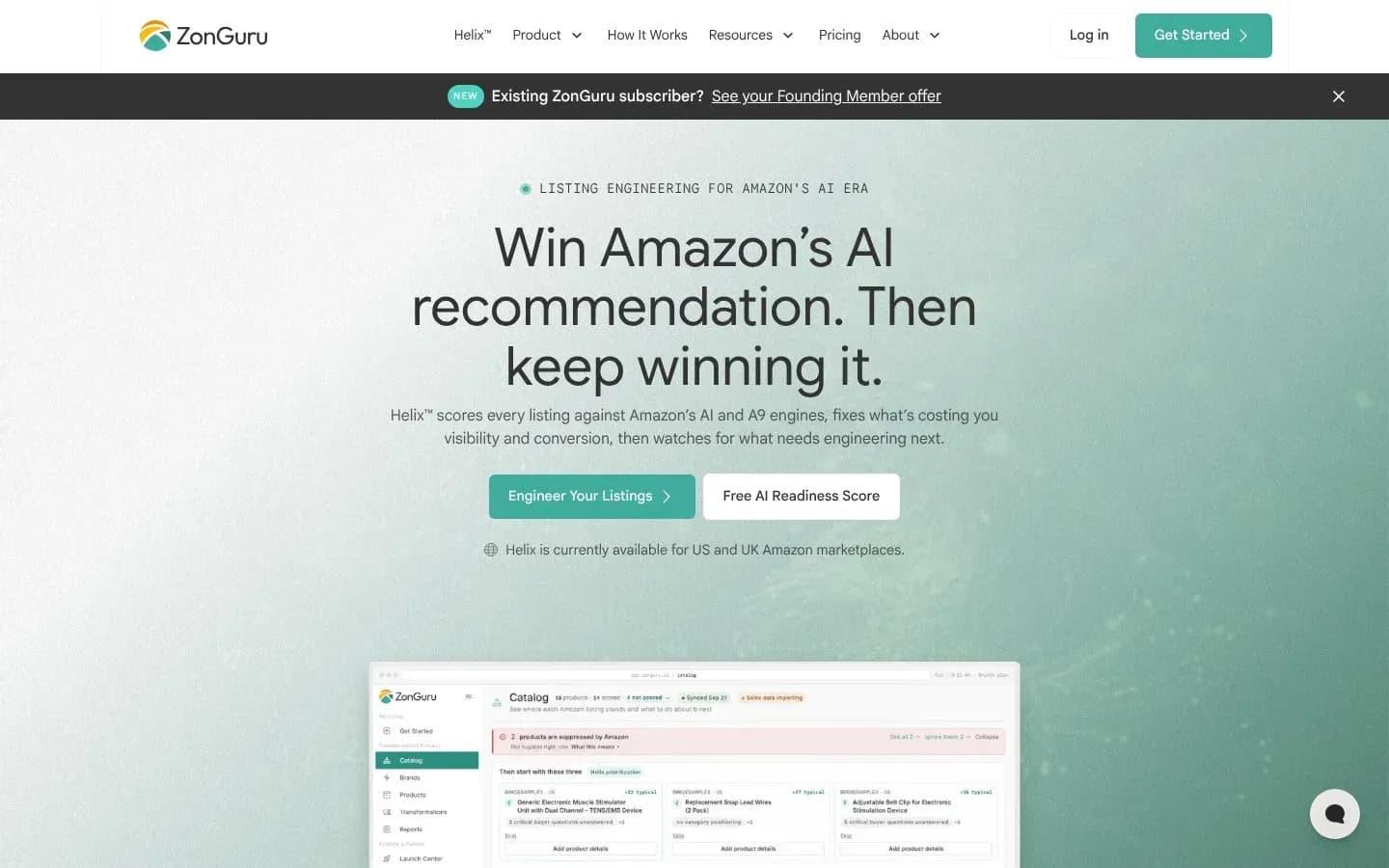
ZonGuru is a toolkit for smaller catalogs. Its keyword tool, Keywords on Fire, takes a competitor ASIN or a phrase and returns keywords ranked by an in-house eScore that weighs search volume, conversion potential and difficulty. ZonGuru says its volume comes from Amazon's Brand Analytics API.
It also sells Keywords on Fire on its own, which is cheaper than most suites here.
Ideal For
ZonGuru fits small sellers who want a ranked shortlist:
- Private label sellers with up to about 20 SKUs
- Sellers who want a ranked shortlist rather than a raw list
- Sellers on a tight budget who only need keyword research
- Sellers in its 10 supported marketplaces
Top Features
The keyword features sort for you:
- Keywords on Fire with eScore ranking
- Keyword revenue estimates for the top 25 listings
- Keywords Spotlight for keyword placement across listing sections
- Free Keywords on Fire Lite
Why They Stand Out?
ZonGuru is one of the stronger choices for a small seller who wants a ranked keyword shortlist without sorting thousands of rows. The eScore turns volume and difficulty into one number.
The standalone keyword plan keeps cost low.
Pros
- Standalone keyword plan at $19/mo
- eScore ranking
- Free Lite version
- 7-day free trial
Cons
- Reverse ASIN works on one ASIN at a time
- The eScore formula isn't published
- Seller plan price rises with SKU count
- 10 marketplaces
Pricing
Keywords on Fire on its own is $19/mo. Researcher starts at $29/mo billed annually, and Seller starts at $49/mo billed annually for 1 to 20 SKUs. Enterprise is custom.
Final Verdict
ZonGuru suits small catalogs that want a ranked keyword list cheaply. The single-ASIN reverse lookup, unpublished score and SKU-based pricing limit it as a catalog grows.
10. AMZScout
Overview
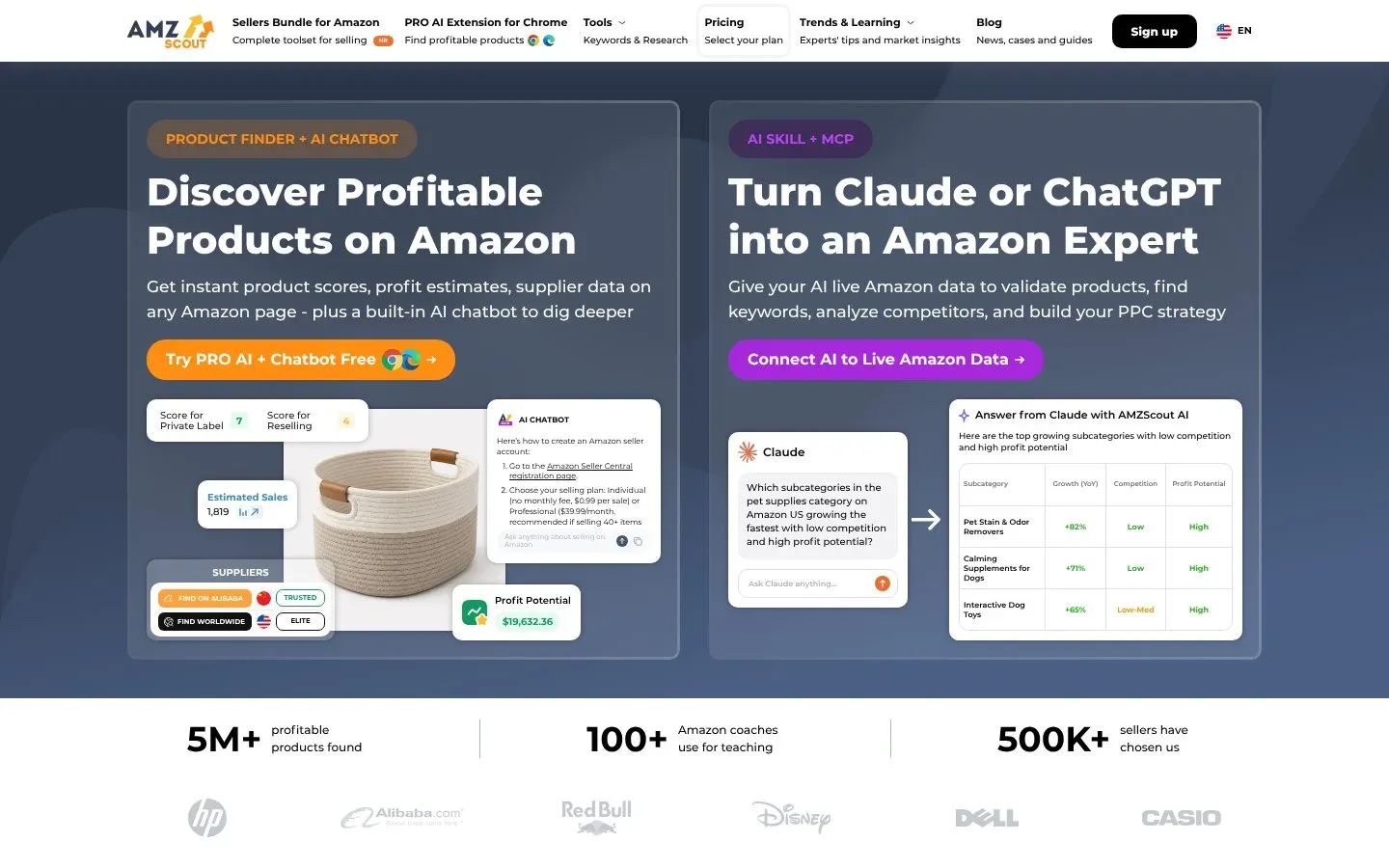
AMZScout is a product research tool with a set of keyword tools: Amazon Keyword Search, Reverse ASIN Lookup and a Keyword Tracker. Keyword Search shows monthly volume and a history graph for each term.
The keyword tools come in the AI Bundle, alongside the PRO AI Extension and product database.
Ideal For
AMZScout fits sellers still deciding what to sell:
- New private label sellers on a budget
- Arbitrage and wholesale sellers
- Sellers who prefer annual pricing
- Sellers who want a quick volume check while researching products
Top Features
The keyword tools cover the basics:
- Amazon Keyword Search with monthly volume and history
- Reverse ASIN Lookup
- Keyword Tracker
- Claude and ChatGPT access to its Amazon data
Why They Stand Out?
AMZScout is one of the strongest budget choices when keyword volume is a side task to product research. The history graph helps tell steady terms from spikes.
On annual billing, it costs less than Amazon SEO Ranking's monthly Pro rate, and it covers product research we don't.
Pros
- Cheap on annual billing
- Volume history per keyword
- Free trial with no card
- Product research in the same bundle
Cons
- Keyword tools are basic next to keyword-first tools
- Reverse ASIN works on one ASIN at a time
- No listing check
- No free plan
Pricing
The AI Bundle costs $59.99/mo, $169.99 for 3 months or $399.99 a year.
Final Verdict
AMZScout suits sellers choosing products on a budget who need a simple volume check. For listing work, pair it with a tool that checks where the keywords go.
How to Choose the Best Amazon Keyword Volume Tool
The right tool depends on what you'll do with the numbers, where you sell, and whether you can trust the figures. These six checks cover most decisions.
1. Start From What You'll Do With the Volume
A keyword list only helps once it's in the title, Item Highlights, bullets and backend field, within Amazon's limits. Ask whether the tool takes you from volume to placement to a check of the live listing, or stops at a spreadsheet.
Amazon SEO Ranking audits the live listing against 12 criteria whose rules are published, so you can see why a keyword placement lost points, and checks rewrites for the 75-character title limit. The free Amazon backend keywords tool checks the backend line against its byte limit, and our guide to Amazon search terms covers where each type of phrase belongs.
2. Check Competition Next to Volume
High volume is only worth title space if the listing can rank for it. Look for a competition measure next to each phrase, and ask how it's calculated.
Amazon SEO Ranking computes its competition score from the review counts of the top listings and how many carry Amazon's Choice or Best Seller badges, signals you can verify on the results page. Several opportunity scores in this list, including ZonGuru's eScore, don't publish their formula.
3. Find Out Where the Numbers Come From, Then Test Them
The best Amazon search keyword volume figure is one you can trace to a source, so ask each vendor what its volume is built on. Answers include Brand Analytics data, Amazon on-platform search data, autocomplete suggestions and competitor rankings, and each produces different numbers.
If you're brand registered, export your top 20 queries from Search Query Performance, run them through the tool and compare the order of the queries, not the raw numbers, since tools count repeat searches differently. A tool that ranks your queries in roughly Amazon's order is safe to use for the phrases Amazon doesn't show you. Comparing the best Amazon keyword tool search volume figures to each other proves little; comparing them to Amazon's own data does. The test still leaves the placement work to you, which is why check 1 comes first.
4. Match Marketplace Coverage to Where You Sell
List every storefront you sell in and check volume coverage for each one, since UK demand for "yoga mat thick" was about 3% of US demand in our test. Counts vary: SellerSprite covers 9 marketplaces, ZonGuru 10, MerchantWords 11, Amazon SEO Ranking 16, SellerApp 18+, and Jungle Scout up to 19 on its enterprise Cobalt tier.
The count matters less than whether your markets are on the list. If you sell in Egypt, Saudi Arabia or the UAE, Amazon SEO Ranking covers them for volume and for its advanced keyword tools, which several larger suites don't list. If you need reverse ASIN data across Europe and Japan, pair us with a keyword-first tool.
5. Check Relevance Before Volume
High volume on the wrong phrase wastes title space. To choose the best Amazon keywords, search volume is the first filter, and relevance is the second. Look for a tool that filters out phrases describing a different product.
Amazon SEO Ranking grades keyword ideas as Close match, Related or All. SellerApp shows a relevance score, and Data Dive builds relevance from competitor rankings.
6. Compare the Real Price, and Test Free on Your Own Keywords
Look at lookups per month, seats and how the price scales, not only the entry price. Helium 10 Platinum caps keyword research at 100 searches a month, Jungle Scout charges $49/mo per extra user, ZonGuru's Seller plan rises with SKU count, and SellerApp's Smart rate rises after three months. Amazon SEO Ranking is flat at any catalog size.
Then test before paying, on your own phrases rather than a demo. Amazon SEO Ranking's free account needs no card and includes 30 keyword lookups and 3 full listing audits a month, so you can check the volume, the competition score and the listing in one sitting.
Everything You Need to Know About Amazon Search Volume Tools
Ratings are our judgment for keyword research used in listing work, based on the published features and prices above. "Data transparency" rates how much each vendor explains about where its volume and scores come from.
| Company | Pros | Cons | Ease of Use | Integrations | Support | Affordability | Data Transparency |
|---|---|---|---|---|---|---|---|
| Amazon SEO Ranking | 16 marketplaces; competition score; keywords checked in a published audit | Advanced tools in 4 marketplaces; no PPC bids; no product research | ⭐⭐⭐⭐⭐ | ⭐⭐⭐⭐ | ⭐⭐⭐⭐ | ⭐⭐⭐⭐⭐ | ⭐⭐⭐⭐⭐ |
| Amazon Brand Analytics | Free; first-party data; click and conversion share | Brand Registry only; ranks not counts; own queries only | ⭐⭐⭐ | ⭐⭐ | ⭐⭐ | ⭐⭐⭐⭐⭐ | ⭐⭐⭐⭐⭐ |
| Helium 10 | Largest toolset; long history; tied to the suite | Platinum capped at 100 searches; $129/mo; unpublished scores | ⭐⭐⭐ | ⭐⭐⭐⭐⭐ | ⭐⭐⭐⭐ | ⭐⭐ | ⭐⭐⭐ |
| Jungle Scout | Exact and broad match; easy to use; product data alongside | No free plan; 1 month history on Starter; paid seats | ⭐⭐⭐⭐⭐ | ⭐⭐⭐ | ⭐⭐⭐⭐ | ⭐⭐⭐⭐ | ⭐⭐⭐ |
| SellerApp | Conversion rate and CPC; 18+ marketplaces; PPC automation | Unpublished weights; Smart price rises after 3 months; $99 entry | ⭐⭐⭐ | ⭐⭐⭐⭐ | ⭐⭐⭐⭐ | ⭐⭐⭐ | ⭐⭐⭐ |
| Data Dive | Competitor-based lists; rank tracking; MCP | Learning curve; no free plan; up to $490/mo | ⭐⭐ | ⭐⭐⭐⭐ | ⭐⭐⭐ | ⭐⭐⭐ | ⭐⭐⭐ |
| SellerSprite | ABA data; conversion rate; low price | 9 marketplaces; inconsistent plan pages; API extra | ⭐⭐⭐⭐ | ⭐⭐⭐⭐ | ⭐⭐⭐ | ⭐⭐⭐⭐⭐ | ⭐⭐⭐⭐ |
| MerchantWords | Keyword-only; published method; seasonality | Figures differ from other tools; no listing check; $749 top tier | ⭐⭐⭐⭐ | ⭐⭐ | ⭐⭐⭐ | ⭐⭐⭐ | ⭐⭐⭐⭐ |
| ZonGuru | $19 standalone plan; eScore; free Lite | Single-ASIN reverse; score unpublished; SKU pricing | ⭐⭐⭐⭐ | ⭐⭐⭐ | ⭐⭐⭐ | ⭐⭐⭐⭐ | ⭐⭐ |
| AMZScout | Cheap annually; volume history; product research | Basic keyword tools; single-ASIN reverse | ⭐⭐⭐⭐ | ⭐⭐⭐ | ⭐⭐⭐ | ⭐⭐⭐⭐ | ⭐⭐ |
Check Your Keyword Volumes Free with Amazon SEO Ranking
If you're picking keywords for a listing, the fastest test is to run your own phrases. Amazon SEO Ranking shows monthly volume and a competition score in 16 marketplaces, grades keyword ideas by relevance, and then audits the live listing against 12 published criteria so you can see whether those keywords landed in the fields Amazon reads.
It's trusted by eRetail Search specialists at Nestlé and eCommerce SEO services agencies such as Reach AI. The free account includes Search volume and Keyword ideas (first 3 results, 30 lookups a month) and 3 full listing audits, with no credit card required.
For full keyword lists, see Pro and Agency pricing: Pro is $79 a month with 2,000 lookups and a 7-day free trial, and every charge has a 14-day money-back guarantee. Already have your list? Audit your listing free to see which keywords made it in.
FAQ
What is the best Amazon keyword search volume tool in 2026?
The best Amazon keyword search volume tool in 2026 for sellers writing or fixing listings is Amazon SEO Ranking, because it pairs volume in 16 marketplaces with a competition score and checks whether the keywords landed in the listing. Helium 10 has the largest keyword toolset if you'll also use its product research and PPC tools. SellerSprite is the strongest budget pick for keyword depth, with Brand Analytics data and conversion rate. Brand-registered sellers should use Amazon Brand Analytics, which is free, to check any tool's numbers.
Which tools show accurate Amazon keyword search volume?
No third-party tool shows exact Amazon keyword search volume, because Amazon doesn't publish counts for every search term. The most accurate figures are Amazon's own, in Brand Analytics Search Query Performance, but they only cover queries that led shoppers to your brand. Tools built on Amazon search data or Brand Analytics, such as Amazon SEO Ranking, SellerSprite and ZonGuru, start closer to Amazon's numbers. The practical test is to run your top 20 Search Query Performance queries through a tool and check that it ranks them in roughly the same order.
What should I consider when choosing an Amazon search volume tool?
When choosing an Amazon search volume tool, consider what you'll do with the numbers, whether it shows competition next to volume, and where its data comes from. Check that it covers every marketplace you sell in and filters phrases by relevance. Compare the real price for your catalog, including caps like Helium 10 Platinum's 100 searches a month and SKU-based pricing. Then test it free on your own keywords before paying.
Why does search volume differ between Amazon keyword tools?
Search volume differs between Amazon keyword tools because each one models its estimates from different data. Some use Brand Analytics or Amazon search data, some autocomplete suggestions and some competitor rankings, and they count repeat searches differently. In one RevenueGeeks test, MerchantWords showed about 38,000 monthly searches for a keyword that Helium 10 put at 14,634. Use volume to rank phrases against each other inside one tool, and don't compare numbers across tools.
How does Amazon SEO Ranking differ from Helium 10 and Jungle Scout?
Amazon SEO Ranking differs from Helium 10 and Jungle Scout by pairing keyword volume and a competition score with a published listing audit and AI rewrite, instead of product research and PPC. Helium 10 and Jungle Scout have larger keyword toolsets and more marketplaces for reverse ASIN data. Amazon SEO Ranking covers search volume in 16 marketplaces, including the UAE, Saudi Arabia, Egypt and India, and has a free plan with no card. Pro is $79/mo against Helium 10 Platinum at $129/mo, and Agency is $249/mo against Diamond at $359/mo.
How do I get started with Amazon SEO Ranking?
You get started with Amazon SEO Ranking by creating a free account and entering your keywords in Search volume, choosing the marketplace. The free plan shows the first 3 results of each search, up to 30 lookups a month, with no card. Pro adds full lists, up to 1,000 keywords per lookup and 2,000 lookups a month. Once you've picked phrases, run a free audit on your ASIN to see where they landed.
How easy is it to switch to Amazon SEO Ranking?
Switching to Amazon SEO Ranking is easy because there's nothing to migrate: paste your existing keyword list into Search volume and you get estimates for up to 1,000 phrases at once on Pro. Save the list to keep a monthly volume snapshot, and run it alongside your current tool to compare how both rank the same phrases. Results copy straight into Google Sheets or Excel, or into one workbook. Monthly plans start with a 7-day free trial, so you can test it before cancelling anything.
Is there a free Amazon search volume tool?
There are free Amazon search volume tools, though each has limits. Amazon Brand Analytics is free for brand-registered sellers but shows ranks rather than counts for most terms. Helium 10's free plan allows 2 Cerebro uses a day, and SellerSprite and SellerApp have free plans. Amazon SEO Ranking's free account shows volume estimates for the first 3 results of each search, up to 30 lookups a month, plus 3 full listing audits, with no credit card.
Check the volume and competition for your own phrases before you rewrite anything. Estimated monthly Amazon searches in 16 marketplaces. The free account includes Search volume and Keyword ideas, no card required.
Try keyword research