Listing Optimization
The Impact of Images on Amazon CTR and Sales
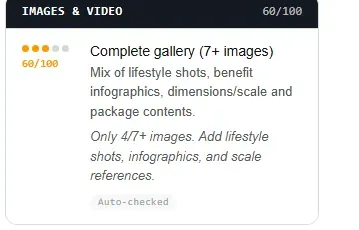
Across this site's own scoring rubric, images carry more combined weight than any other single category, more than title, more than bullets. That's because a single image set does three jobs at once: it drives search-results click-through before a shopper even opens the listing, it drives conversion once they're on it, and it's what an AI assistant increasingly reads to judge whether a listing actually matches a question.
For where images fit alongside the rest of a listing, see the listing-optimization guide.
The main image has hard requirements, not preferences
Pure white background, product filling roughly 85% or more of the frame, at least 1000px on the longest side so Amazon's zoom feature works, and no added text, logos, or props. These aren't stylistic recommendations. A main image that fails them can be suppressed outright, not just deprioritized.
What the rest of the gallery is for
Seven or more images total, and each one should do a job the main image can't:
- A lifestyle shot showing the product in actual use, not just isolated on white.
- A scale or dimension reference, next to a common object, or with measurements overlaid.
- An infographic stating the specs a shopper would otherwise have to read the description to find.
- Package contents, if what's included is ever ambiguous from the main image alone.
Video and OCR-legible infographics
A short product video is scored too, though it's self-reported rather than auto-detected, since video isn't reliably confirmable by a scrape. Its main measurable effect is on conversion and dwell time, not search ranking directly. Text inside infographics matters more than sellers expect for a separate reason: AI systems like Rufus can extract legible on-image text through OCR, which means a blurry or tiny infographic isn't just a design miss, it's invisible data. More on that in How Rufus and COSMO Are Changing Amazon SEO.
CTR happens before the click
The main image is the entire evaluation a shopper does in search results before deciding to click. Title and price matter too, but the image is processed first and fastest. A stronger main image is one of the few conversion-adjacent changes that also moves click-through rate directly, which is a distinct metric from the on-page conversion rate covered in Does Conversion Rate Affect Ranking?
FAQ
What are Amazon's technical requirements for the main image?
A pure white background, the product filling roughly 85% or more of the frame, at least 1000px on the longest side so zoom works, and no added text, logos, or props. Amazon can suppress a main image that fails these outright, not just rank it lower.
Does a product video affect Amazon ranking?
It's one of the scored criteria in this site's own audit, though it's self-reported rather than auto-detected, since video isn't something a scrape can reliably confirm. Its main effect is on dwell time and conversion rate: shoppers who watch a product in use convert measurably more often.
What should the images after the main image show?
A mix, not more of the same: at least one lifestyle shot showing the product in use, a scale or dimension reference, an infographic covering the specs a shopper would otherwise have to read for, and package contents if that's ever in question.
The audit checks your main image against Amazon's actual requirements and counts your gallery. Paste any ASIN to see where it stands.
Audit a listing freeMore from the blog